











OEKO-TEX Standard 100: A Guide to Corporate Textile Certification and Export Compliance
What Is OEKO-TEX? A Safety Standard for Textiles
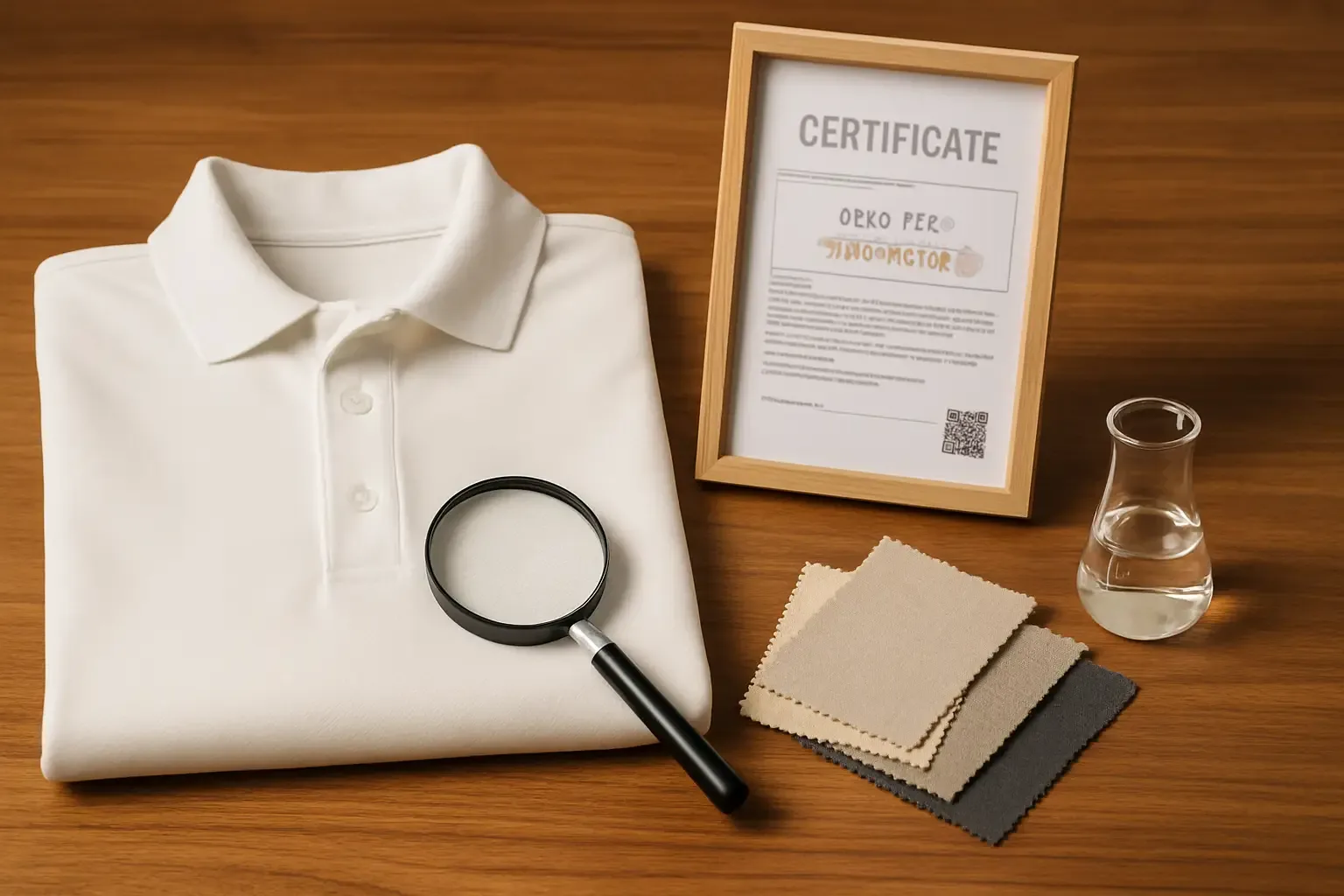
OEKO-TEX (officially the OEKO-TEX Association) is an international certification body founded in 1992 by institutes based in Austria and Germany, which independently tests whether textile products contain chemicals harmful to human health. OEKO-TEX runs several certification programmes; the most widespread, and the one corporate buyers ask for, is OEKO-TEX Standard 100.
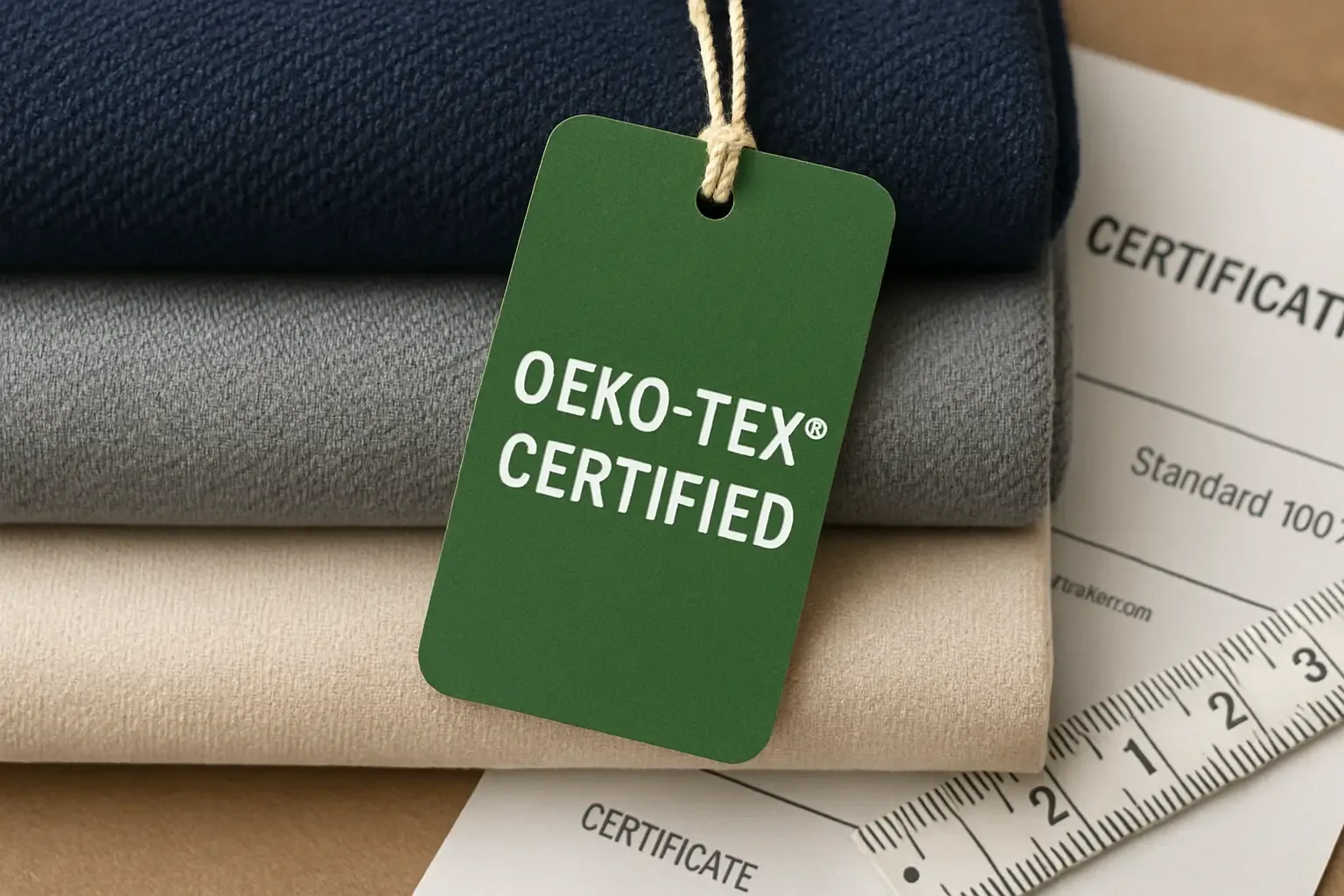
The certificate guarantees that every component of a textile product (yarn, fabric, dye, print, zips, buttons, labels) has passed tests for harmful chemical residues. In Türkiye, international franchise chains, companies producing for export and large public and infrastructure projects ask for OEKO-TEX certified textiles.
Mars Wear produces with OEKO-TEX Standard 100 certified fabric on request. In this guide we look in detail at the certificate, its classes, the chemicals tested and the supply process for corporate buyers.
OEKO-TEX Standard 100 Product Classes
The certificate is divided into four main product classes, categorised by the textile's contact with the skin:
| Class | Product type | Test strictness | Example |
|---|---|---|---|
| I (babies) | Textiles for babies aged 0–3 | The strictest | Baby bodysuits, bedding |
| II (skin contact) | Underwear, T-shirts, socks | Very strict | Work T-shirts, polo shirts, undergarments |
| III (limited contact) | Outerwear, coats, jackets | Strict | Work jackets, parkas, winter jackets |
| IV (decoration) | Curtains, upholstery, carpets | Standard | Office curtains, seat fabric |
In workwear production, the most common class is II (skin contact). Products in constant contact with the skin, such as polos, T-shirts, shirts and sweatshirts, are certified in this class.
The Chemicals Tested
For OEKO-TEX Standard 100 certification, 100+ different chemical substances are tested. The main categories:
1. Legally Banned Substances
- Azo dyes: Dyes that break down into carcinogenic aryl amines on contact with the skin
- Carcinogenic chemicals: Certain cancer-causing organic compounds
- Allergenic disperse dyes: Polyester dyes with a risk of skin allergy
- Chlorinated phenol compounds: Pentachlorophenol (PCP), tetrachlorophenol (TeCP)
2. Substances That May Be Harmful to Health
- Formaldehyde: A chemical used for crease resistance; causes allergies and respiratory problems
- Extractable heavy metals: Lead (Pb), cadmium (Cd), mercury (Hg), arsenic (As), nickel (Ni)
- Pesticide residues: Residues of agricultural chemicals used in growing cotton (organochlorine, organophosphorus)
- PFCs (perfluorinated compounds): Substances used for water repellency but harmful to the environment
3. Substances Considered Suspect by Scientists
- Disperse dyes (allergenic): 21 types of allergenic polyester dye
- Aromatic amines: Those that pose a health risk through skin contact
- Plasticisers (phthalates): The endocrine disruptors DEHP, DBP, BBP
- Organotin compounds: Tributyltin (TBT), dibutyltin (DBT)
4. pH and Colour Fastness
- pH value: In a range that does not upset the skin's pH balance (4.0–7.5 for skin contact)
- Colour fastness: Checks on colour bleeding in washing, with sweat and with saliva
- Odour: The absence of abnormal odours (residual solvents, mould etc.)
The product is certified only if the test results do not exceed the standard in any single component.
The OEKO-TEX Certification Process
The process a textile manufacturer goes through to obtain OEKO-TEX Standard 100 certification:
- Application: The manufacturer applies to an OEKO-TEX member institute.
- Sampling: Samples are taken from the production facility (representing the production batch).
- Laboratory testing: The samples are tested for 100+ chemicals in an accredited laboratory.
- Documents: The manufacturer provides information on all the dyes, chemicals and yarn suppliers it uses.
- Site audit: An on-site audit of the production facility is carried out.
- Issuing the certificate: If all tests are passed, a certificate valid for 1 year is issued.
- Annual renewal: The certificate is renewed after 12 months with new testing.
The cost of testing is borne by the manufacturer; for a typical textile manufacturer, an annual cost of EUR 8,000–15,000 is expected.
Which Sectors Ask for OEKO-TEX?
Why corporate buyers ask for OEKO-TEX, and how common it is by sector:
| Buyer | Reason for asking for OEKO-TEX | How often it is requested |
|---|---|---|
| International franchises (coffee, fast food) | Global supply standard | Very high |
| Exporting textile brands | EU and US market requirement | Very high |
| Hospital chains (admin) | Hygiene, sensitive skin | High |
| Children's and school uniforms | Health sensitivity | High |
| Food production facilities | HACCP + textile safety | High |
| Hotel chains (towels, sheets) | Guest skin contact | Medium to high |
| Public energy and highway bodies | Public tender specifications | Medium |
| LEED green building projects | Sustainability score | Medium |
| Standard corporate customers | Premium positioning | Low to medium |
The certificate sends the corporate buyer a "premium textile supply" message and raises the brand's image.
OEKO-TEX vs Other Textile Certificates
| Certificate | Focus | Scope of testing |
|---|---|---|
| OEKO-TEX Standard 100 | Human health (chemicals) | 100+ harmful chemicals |
| OEKO-TEX MADE IN GREEN | Social responsibility + sustainable production | Environment + working conditions |
| STeP by OEKO-TEX | Sustainability of the production facility | Environment + social |
| GOTS (Global Organic Textile Standard) | Organic textiles | Ban on pesticides + synthetic chemicals |
| bluesign | Environment + sustainability | Chemical management + environment |
| EU Ecolabel | Environmental impact | Carbon footprint + environment |
| ISO 14001 | Environmental management system | The manufacturer's management system |
For corporate supply focused on human health, OEKO-TEX Standard 100 is preferred; for organic textiles, GOTS; and for sustainability, STeP by OEKO-TEX or bluesign. Large brands that require several certificates combine these programmes.
Reading the OEKO-TEX Label
The label of an OEKO-TEX certified textile product includes the following information:
- The words "OEKO-TEX STANDARD 100" and the logo
- Certificate number: For example "01.0.12345 OETI" (showing which institute issued it)
- Class tested: In the form "tested in Class I/II/III/IV"
- Manufacturer's name: The company holding the certificate
- QR code: Scanned with a mobile device to verify the certificate
Corporate buyers want to see the certificate when confirming an order; in Mars Wear production, a copy of the certificate is sent with the invoice.
Applying OEKO-TEX to Different Fabric Types
| Fabric | OEKO-TEX compatibility | Typical Mars Wear use |
|---|---|---|
| 100% cotton piqué | ✅ Certified version available | Polo work shirts |
| 100% cotton single jersey | ✅ Certified version available | Crew-neck and V-neck T-shirts |
| 50% cotton + 50% polyester | ✅ Certified version available | Work T-shirts, sweatshirts |
| 100% polyester dry-fit | ✅ Certified version available | Sports sponsorship, events |
| Antibacterial cotton | ✅ (the finish must be OEKO-TEX approved) | Healthcare, food production |
| Microfibre fleece | ✅ Certified version available | Fleece jackets, fleece gilets |
| Gabardine (100% cotton) | ✅ Certified version available | Work trousers |
| Taslan (PU laminate) | ⚠️ Limited (the PU component is tested) | Waterproof jackets |
| FR flame-retardant fabric | ⚠️ Some FR finishes are restricted | Welding, chemical sites |
The details of each fabric type are on Mars Wear's Fabric Guide page.
Export Scenarios: Supplying the EU and the USA
OEKO-TEX requirements for Turkish textile manufacturers selling to international franchise chains or EU/US importers:
Supplying the EU
- The REACH Regulation (EC 1907/2006): Restrictions on harmful chemicals
- OEKO-TEX Standard 100: The standard certificate importers ask for
- EU Ecolabel: An additional certificate for premium supply
- CE marking: An additional requirement for PPE products
Supplying the USA
- CPSIA: Lead and phthalate limits for children's products
- FTC labelling rules: Mandatory fibre content labelling
- OEKO-TEX is accepted: As supporting evidence of CPSIA compliance
- Berry Amendment: A "US origin" requirement for US defence procurement (not applicable to Turkish products)
Supplying China and Asia
- GB 18401: China's textile safety standard (similar to OEKO-TEX)
- JIS L 0888 (Japan): A local test standard
OEKO-TEX is generally accepted as equivalent to the local standards of Asian countries.
The Corporate Supply Process and OEKO-TEX
A typical corporate process for OEKO-TEX certified supply:
- Drawing up the specification: The customer states the requirement for OEKO-TEX Standard 100 Class II.
- Proof of the manufacturer's certificate: Mars Wear sends a copy of the certificate.
- Sample testing: The customer can verify it in its own laboratory.
- Bulk production: The certified batch is produced.
- Documentation by batch: A copy of the certificate for each production batch is sent with the invoice.
- Returns and exchanges: If a batch is found not to comply with the certificate, it is exchanged free of charge.
For orders requiring OEKO-TEX, Mars Wear has standardised certificate checking, production tracking and customer reporting.
Cost Impact: How Much More Does Certified Textile Cost?
The price difference for products made with OEKO-TEX certified fabric:
| Product | Standard price | OEKO-TEX certified | Difference |
|---|---|---|---|
| 180 g cotton piqué polo | TRY 180–220 | TRY 200–260 | +10–15% |
| 200 g blend T-shirt | TRY 180–220 | TRY 205–260 | +12–18% |
| 280 g fleece jacket | TRY 285–450 | TRY 320–510 | +12–15% |
| Gabardine work trousers | TRY 285–540 | TRY 325–620 | +14–18% |
| 320 g winter sweatshirt | TRY 290–490 | TRY 330–560 | +14–16% |
Certified textiles make a price difference of about 10–18%; however, international franchise chains and premium corporate buyers see this difference as added value.
Information for Customers Who Do Not Need OEKO-TEX
In Türkiye, small and medium-sized businesses generally do not ask for OEKO-TEX; standard fabric supply is enough. The typical profile of a corporate buyer who asks for OEKO-TEX:
- International franchise chains with multiple locations (coffee chains, fast-food chains and similar)
- Textile brands producing for export
- Private hospital groups
- Public healthcare institutions
- Large public infrastructure projects in energy and highways
- LEED certified green building projects
- Manufacturers of children's and school uniforms
Mars Wear supplies standard fabric as a rule; a certificate requirement should be stated before ordering.
Verifying OEKO-TEX: QR Code and Online Check
To check that the OEKO-TEX certificate number on a textile product is genuine:
- Take the certificate number from the label (for example "01.0.12345 OETI")
- Go to the certificate verification (Label Check) page on the official OEKO-TEX website
- Enter the number → the certificate holder's company name, class and validity date are shown
- If there is a QR code, scan it on a mobile device for automatic verification
If a false certificate claim is found, the supplier contract is terminated and legal proceedings are started.
The Mars Wear OEKO-TEX Supply Policy
- Produced on request: OEKO-TEX certified fabric supply from a minimum of 200 pieces
- Certificate copy: Sent with the invoice
- Batch control: Each production batch comes from a separate certified supply batch
- Colour options: The same range of colours as standard in certified supply
- Effect on lead time: +1–2 weeks of extra production time (for fabric supply)
- Price difference: 10–18% on top of the standard price
Frequently Asked Questions
What is OEKO-TEX Standard 100?
It is an international certificate documenting that textile products have been tested for 100+ different harmful chemical substances. It was created in 1992 by institutes based in Austria and Germany.
Which classes does the certificate include?
Class I (babies), II (skin contact — T-shirts etc.), III (limited contact — jackets etc.) and IV (decoration). In workwear production, Class II is the most common.
Which substances does OEKO-TEX test for?
Azo dyes, carcinogenic aryl amines, formaldehyde, heavy metals (Pb, Cd, Hg, As), pesticide residues, phthalates, PFC compounds, organotin compounds and the pH value are tested.
How long is the certificate valid?
It is valid for 1 year. The manufacturer must have annual renewal testing carried out. A certificate that is not renewed is invalid.
Is OEKO-TEX an organic textile certificate?
No, OEKO-TEX guarantees that a product contains no harmful chemicals, but not that it comes from organic farming. For organic, a separate GOTS certificate is needed.
Who carries out OEKO-TEX testing in Türkiye?
Testing is carried out by OEKO-TEX member institutes and their accredited partner laboratories; the current list can be found on the official OEKO-TEX website.
How is a certificate verified?
Verification is done on the "Label Check" page of the official OEKO-TEX website, using the number or the QR code.
Which fabric types can be certified?
OEKO-TEX certified versions are available for cotton piqué, single jersey, polyester blends, microfibre fleece, gabardine and polyester dry-fit. PU laminates and some FR finishes are restricted.
Which buyers ask for OEKO-TEX?
International franchise chains, brands exporting to the EU/US, hospital groups, public healthcare projects, large energy and highway infrastructure projects, LEED green buildings and manufacturers of children's uniforms.
Does Mars Wear supply OEKO-TEX certified products?
Yes, on request, production with OEKO-TEX certified fabric is carried out from a minimum of 200 pieces. The price difference is 10–18% and the extra time 1–2 weeks.
Conclusion: The Standard for Premium Corporate Supply
OEKO-TEX Standard 100 certified textiles are visible proof of premium supply for the corporate buyer. They shape supply decisions for international franchise chains, export suppliers and healthcare groups.
With production to OEKO-TEX requirements, Mars Wear offers supply that complies with international standards. To request certification, you can reach us through the quick quote form. The Fabric Guide page covers the types of fabric, and the Workwear section shows all the options in the sub-categories.
Keep reading
 Regulations and Standards
EN ISO 20471: A Guide to Reflective Classes
The difference between EN ISO 20471 Classes 1, 2 and 3, the hi-vis vest standard and matching classes to sectors. Get a quote for certified production.
 Regulations and Standards
What Is PPE? A Guide to Personal Protective Equipment
What PPE (personal protective equipment) is, its categories, the employer's duties and how to choose it. Get a quote for bulk PPE textiles.
 Regulations and Standards
Hard Hat Colours and Their Meanings: A Hierarchy Guide for Sites, Factories and Logistics
Hard hat colours and their meanings: yellow, white, blue, green, red and orange. EN 397, the site hierarchy and a quote for bulk workwear.