









Workwear Fabric Guide: Piqué, Single Jersey, Blends
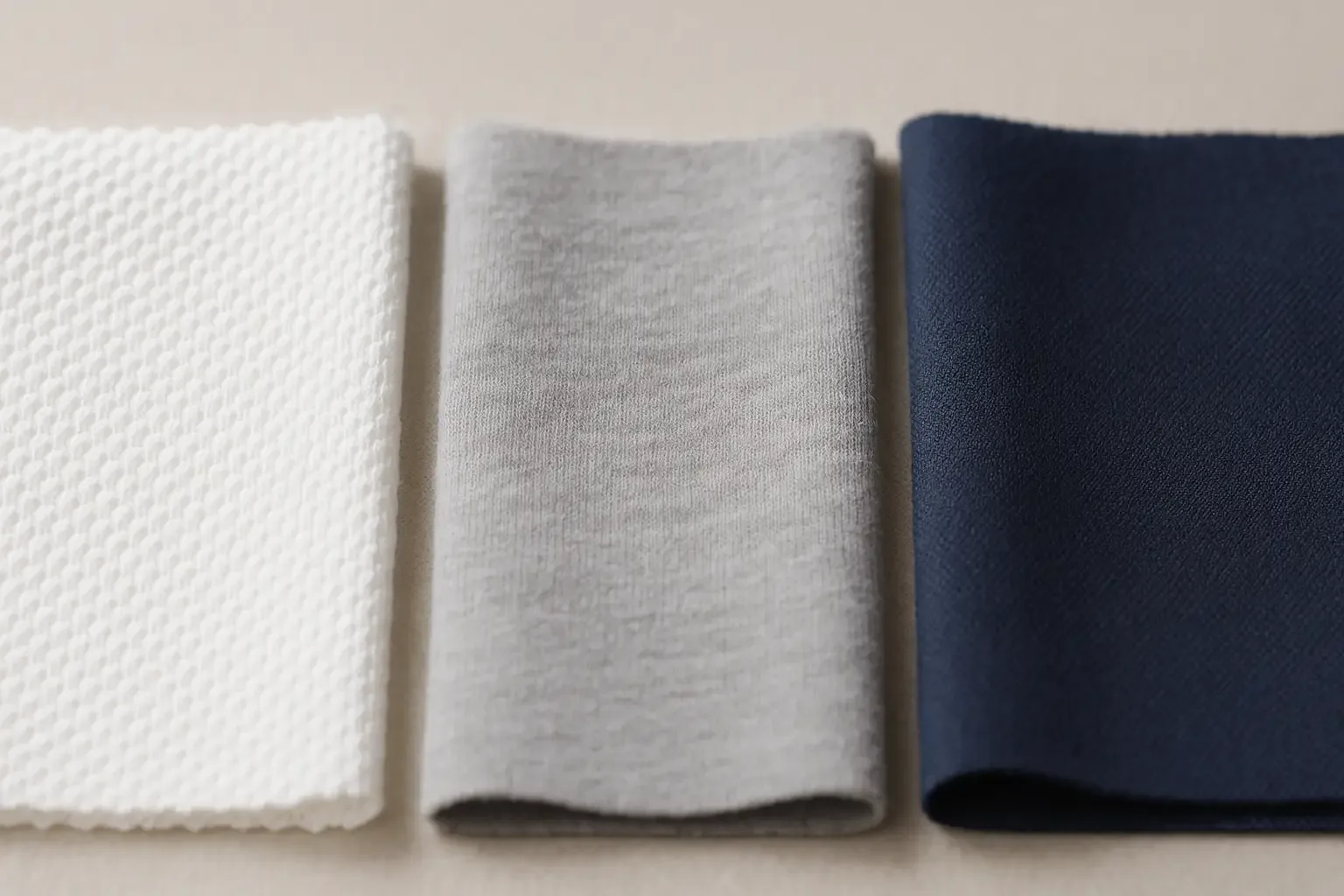
Workwear Fabric Types: An Overview
In workwear production, choosing the fabric is a critical decision that directly determines a product's durability, comfort, visual quality and unit cost. On the same model — a polo work shirt, for example — different fabric choices serve completely different uses. In this guide, we look in detail at the five main fabric types used in Mars Wear production, which suits which sector, and the criteria for deciding.
Corporate companies, factories and production facilities, logistics and warehousing firms, chain brands, tech companies and healthcare chains have different fabric priorities. The right fabric choice can make a 15–30% difference to your annual textile budget, and it is decisive for staff satisfaction and brand perception.
100% Cotton Piqué: The Standard Corporate Choice
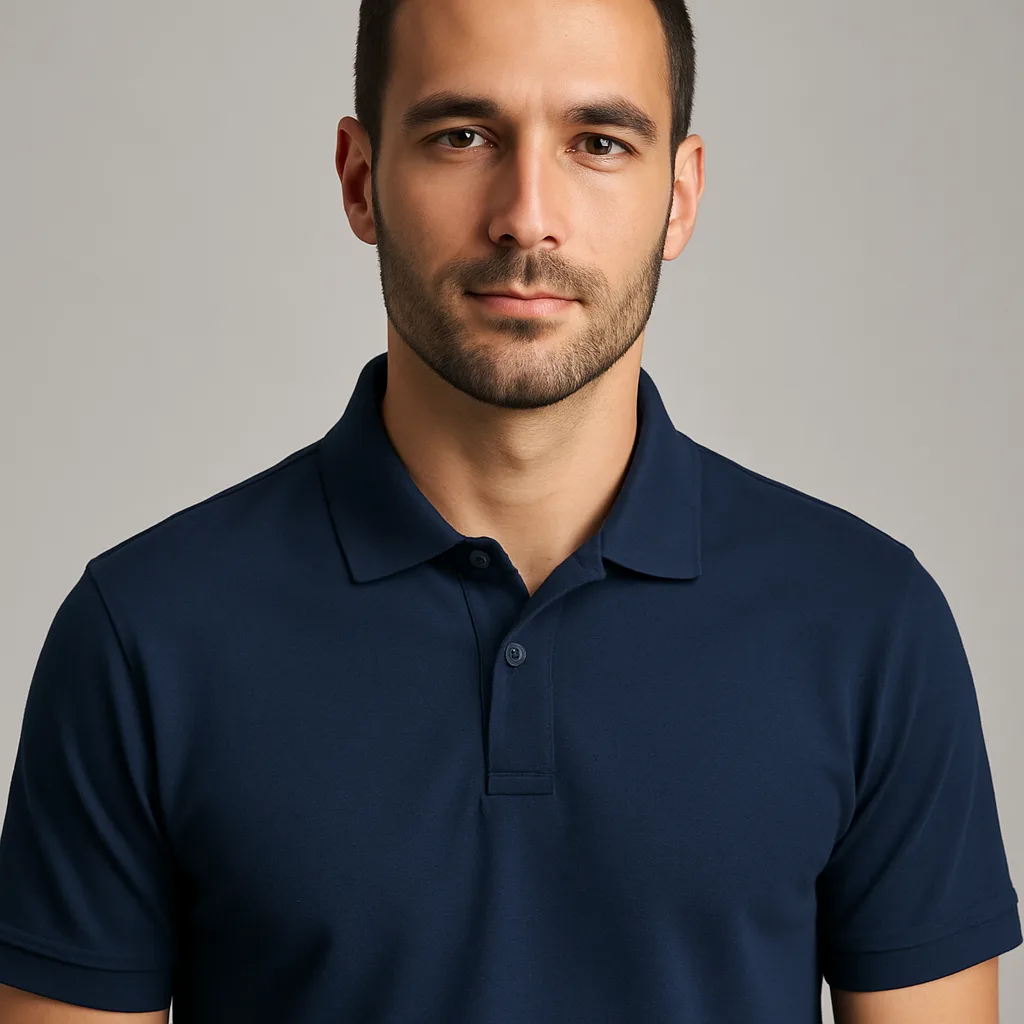
Cotton piqué is the most common fabric in the workwear sector, thanks to its textured surface, corporate look and high airflow. Its textured knit (a waffle-like structure) forms small cells on the surface; these cells draw sweat away from the body and help it dry quickly.
Technical specifications:
- Weight: 180–220 g/m² is the standard range
- 3–5% shrinkage in the wash is normal
- Durable for 50–80 washes
- An ideal base for embroidery
- Stays stable across many colour options
Ideal use: Polo work shirts, office and admin team clothing, retail chains, office towers and holding companies, call centre staff, hotel chain reception and concierge teams, corporate event T-shirts. Cotton piqué is the standard option wherever a "corporate look" is needed.
100% Cotton Single Jersey: Soft and Breathable
Cotton single jersey is a skin-friendly fabric with a plain, thin and soft knit. It feels lighter than piqué and suits sensitive skin better. It dries faster after washing and, because it has no texture, gives a smooth result with prints.
Technical specifications:
- Weight: 160–200 g/m² is the standard range
- 3–5% shrinkage in the wash is normal
- A soft surface, suitable for layering
- The best base for transfer printing
- A flexible structure that takes an antibacterial finish
Ideal use: Crew-neck and V-neck work T-shirts, employees with sensitive skin, healthcare chains and clinic staff, food production lines, corporate run and marathon sponsorships, light summer T-shirts, event campaigns. Single jersey is preferred where "comfortable and hygienic" is expected.
50% Cotton + 50% Polyester Blend: Maximum Durability
Blended fabrics, in which cotton and polyester yarns are mixed, combine the advantages of both materials: the breathability of cotton + the durability, colour fastness and quick drying of polyester. In physically demanding settings and sectors that need frequent washing, it is the longest-lasting solution.
Technical specifications:
- Weight: 180–220 g/m² is the standard range
- 1–2% shrinkage in the wash — much less than piqué and single jersey
- Durable for 100+ washes, colours do not fade
- Very easy to iron — does not crumple in industrial laundries
- Suitable for outdoor use in a double-knit single jersey construction
Ideal use: Logistics and warehouse staff, parcel chain field teams, factories and production lines, workshop and garage workers, vehicle service staff, industrial cleaning companies, operational teams that need frequent washing. Blended fabric is ideal for companies aiming for "long life and low care costs".
100% Polyester Dry-Fit: Active and Light
Dry-fit technology relies on the special knit structure of polyester yarns to move sweat away from the body and evaporate it on the outer surface. It is a light, quick-drying fabric that does not cling to the skin during physical activity.
Technical specifications:
- Weight: 140–180 g/m² range (the lightest fabric)
- No deformation in the wash — keeps its shape
- Static can build up (resolved with fabric softener)
- Colours do not fade; photographic quality with transfer printing
- A UV protection additive can be added
Ideal use: Sports team sponsorships, corporate run/marathon/cycling events, outdoor field teams (in summer), training and sports club T-shirts, outdoor launch events, trade fair stand teams. Polyester dry-fit is preferred for uses that call for "active movement + a hot environment". It is not recommended for offices and air-conditioned spaces.
Antibacterial Cotton: Healthcare and Food
Antibacterial fabric is made by applying silver ions or a natural antibacterial finish to cotton or blended fabric. It provides lasting protection that prevents bacterial growth even after washing. It has become a standard requirement in healthcare chains, food production facilities, clinical laboratories and hygiene-critical sectors.
Technical specifications:
- Weight: 180–200 g/m² (usually piqué or single jersey based)
- 95%+ antibacterial effectiveness continues after 60 washes
- Chlorine bleach reduces its effectiveness — use only chlorine-free types
- A 10–15% price difference
- Can be supplied together with OEKO-TEX Standard 100 certification
Ideal use: Private hospital chains, outpatient clinic groups, imaging centres, food production and packing facilities, ready-meal factories, chemical/biological laboratories, pharmacies and health stores, clinic reception. It stands out in every setting that requires HACCP, ISO 22000 and health inspections.
OEKO-TEX Certified Fabric: International Standards
OEKO-TEX Standard 100 is an international certificate documenting that a fabric contains no chemicals harmful to human health from its production process. European and US-based chain brands, companies producing for export and international food chains ask for this certificate. At Mars Wear, OEKO-TEX fabric is produced on request.
Ideal use: International franchise chains (coffee, fast food, hotel chains), export-oriented production, supply to European customers, staff with sensitive skin or a history of allergies, children's and school uniforms.
Fabric Comparison Table
| Fabric | Comfort | Durability | Cost | Main use |
|---|---|---|---|---|
| 100% cotton piqué | ★★★★ | ★★★ | Medium | Offices, retail, corporate |
| 100% cotton single jersey | ★★★★★ | ★★★ | Medium | Healthcare, events, sensitive skin |
| Cotton + polyester | ★★★ | ★★★★★ | Medium to high | Logistics, factories, workshops |
| 100% polyester dry-fit | ★★★ | ★★★★ | Low to medium | Sport, events, outdoors |
| Antibacterial | ★★★★ | ★★★★ | High | Healthcare, food, clinics |
| OEKO-TEX certified | ★★★★★ | ★★★★ | High | International franchises, export |
Fabric Selection Guide by Sector
| Sector | Recommended fabric | Why |
|---|---|---|
| Office and admin teams | 180 g cotton piqué | Corporate look + comfort |
| Retail chains | 180 g cotton piqué | Customer interaction, brand |
| Hotel/café chain service | 180 g piqué or single jersey | Quick drying, hygiene |
| Call centres and office towers | 180 g cotton piqué | Air-conditioned, everyday comfort |
| Tech companies | 180 g single jersey | A modern, relaxed image |
| Hospital admin | 180 g antibacterial | Hygiene + everyday use |
| Food production facilities | 180–200 g antibacterial | HACCP requirement |
| Clinical laboratories | OEKO-TEX antibacterial | International standard |
| Factory production lines | 200 g cotton-polyester | Abrasion resistance |
| Logistics and warehousing | 200 g cotton-polyester | Carrying loads, frequent washing |
| Workshops and garages | 200 g blend | Resistance to oil stains |
| Corporate runs / marathons | 160 g polyester dry-fit | Active movement, sweating |
| Sports team sponsorship | 180 g polyester dry-fit | Performance, durability |
| Events and trade fairs | 160 g cotton single jersey | Low cost, single use |
Which Fabric for Which Season?
- Summer (June–September): Cotton single jersey 160–180 g or polyester dry-fit 160 g. Airflow and quick drying are critical.
- Autumn/spring: Cotton piqué 180 g is standard. Balanced temperatures.
- Winter (December–February): Cotton-polyester blend 200–220 g, as a base layer under jackets and sweatshirts.
- Air-conditioned settings (all year): Cotton piqué 180 g is the best option; it is not affected by climate conditions.
How Fabric Relates to Logo Printing and Embroidery
The choice of fabric directly affects the result of the logo application method:
- For embroidery: Cotton piqué (180–200 g) gives the best result. Single jersey is also suitable; polyester dry-fit is less suited to embroidery.
- For screen printing: All cotton fabrics are suitable. Polyester needs special inks.
- For transfer printing: Single jersey and dry-fit offer the smoothest base. On piqué, the texture can affect the transfer.
- For DTG (digital) printing: 100% cotton is essential. On polyester and blends, colour density falls.
For details of logo application methods, see the Logo Printing Methods Guide page.
Frequently Asked Questions
What is the difference between piqué and single jersey?
Piqué has a textured knit and a more corporate look. Single jersey has a plain knit, feels soft and comes across as lighter. Piqué is preferred for corporate offices, retail and chain brands; single jersey for healthcare, events and sensitive skin.
Is a blended fabric at a disadvantage compared with 100% cotton?
No, blended fabric has its own strengths: it shrinks less, its colours do not fade, and it is more durable. Only its breathability is slightly lower than cotton's. For logistics, factories and settings that need frequent washing, it is actually the better option.
Does antibacterial fabric lose its effect with washing?
Professionally treated antibacterial fabrics keep over 95% of their effectiveness after 60 washes. If you do not use chlorine bleach, protection continues throughout the product's life. Chlorine-free bleaches and normal detergents do not affect it.
Why does OEKO-TEX certification matter?
OEKO-TEX Standard 100 documents that the fabric contains no chemicals harmful to human health. It is the standard for European and international chain brands. For companies that export or work with foreign franchises, it becomes a requirement.
Is polyester dry-fit suitable for office use?
Polyester dry-fit is not ideal for an office setting. It has drawbacks such as clinging to the skin, static and a weaker corporate image. For the office, cotton piqué or single jersey should be chosen.
Can I order mixed fabrics?
Yes, different fabric types can be requested in a single order. For example, 180 g piqué for admin staff and a 200 g blend for field staff can be produced in the same order. Each fabric is priced as a separate line.
Which standards should the fabric meet?
Corporate customers commonly ask for OEKO-TEX Standard 100, the food sector for HACCP, and healthcare chains for antibacterial fabric. All of these standards can be met in Mars Wear production; certificate documents are sent together with the order confirmation.
Which fabric stays most stable in a custom Pantone colour?
Polyester and blended fabrics give the most stable result in custom Pantone colour production. 100% cotton fabrics may show colour variation after washing, but with modern reactive dyeing this difference stays minimal.
Conclusion: Choosing the Right Fabric
The answers to three basic questions guide the choice of workwear fabric: 1) Which sector? 2) Which season and environment? 3) How often will it be washed? The combination of these three parameters points you towards cotton piqué, single jersey, a blend or polyester.
At Mars Wear, we offer production in every fabric option from a minimum of 100 pieces. Antibacterial and OEKO-TEX certified fabrics are added on request. For more information and to request samples, you can reach us through the quick quote form or on WhatsApp. To see current products, browse the work T-shirts category.
Keep reading
 Workwear Guides
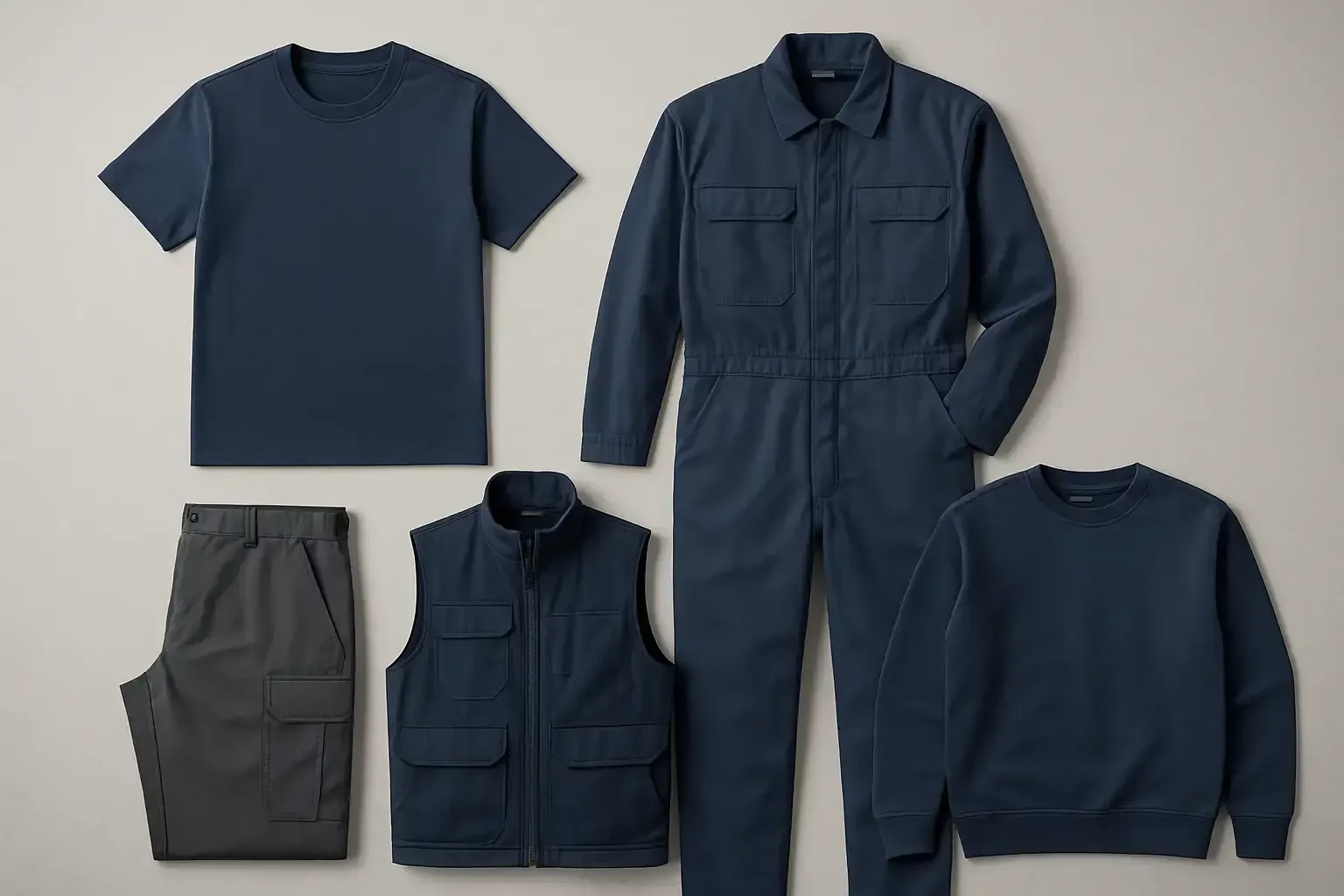
Workwear Models (Category Guide)
Workwear models: T-shirts, trousers, coveralls, gilets and sweatshirts. A guide to choosing by use, fabric and weight. Get a quote for logo production.
 Workwear Guides
Bulk Logo Workwear Production (Min. 100)
Bulk logo workwear and work clothing manufacturing from 100 pieces. Sampling, fabric, production and a 15-working-day delivery process. Get a quote.
 Workwear Guides
Workwear Prices and Cost Guide
Workwear prices vary with fabric, weight, printing and quantity. Learn the logic of tiered costs and get a net price quote for your project.