







A Guide to Logo Printing and Embroidery Methods
The signature of corporate workwear is the logo application method. On the same T-shirt, embroidery and screen printing give a completely different corporate feel — and they also differ greatly in durability, cost and fabric compatibility. In bulk runs of 100 pieces or more, choosing the wrong printing method ends in logos peeling, cracking or fading within the first 10–20 washes, and in bulk returns. This guide was written to help corporate buyers such as factories, logistics firms, restaurant and hotel chains, office towers, healthcare and private security choose the right logo application method.
Embroidery: The Premium Corporate Standard
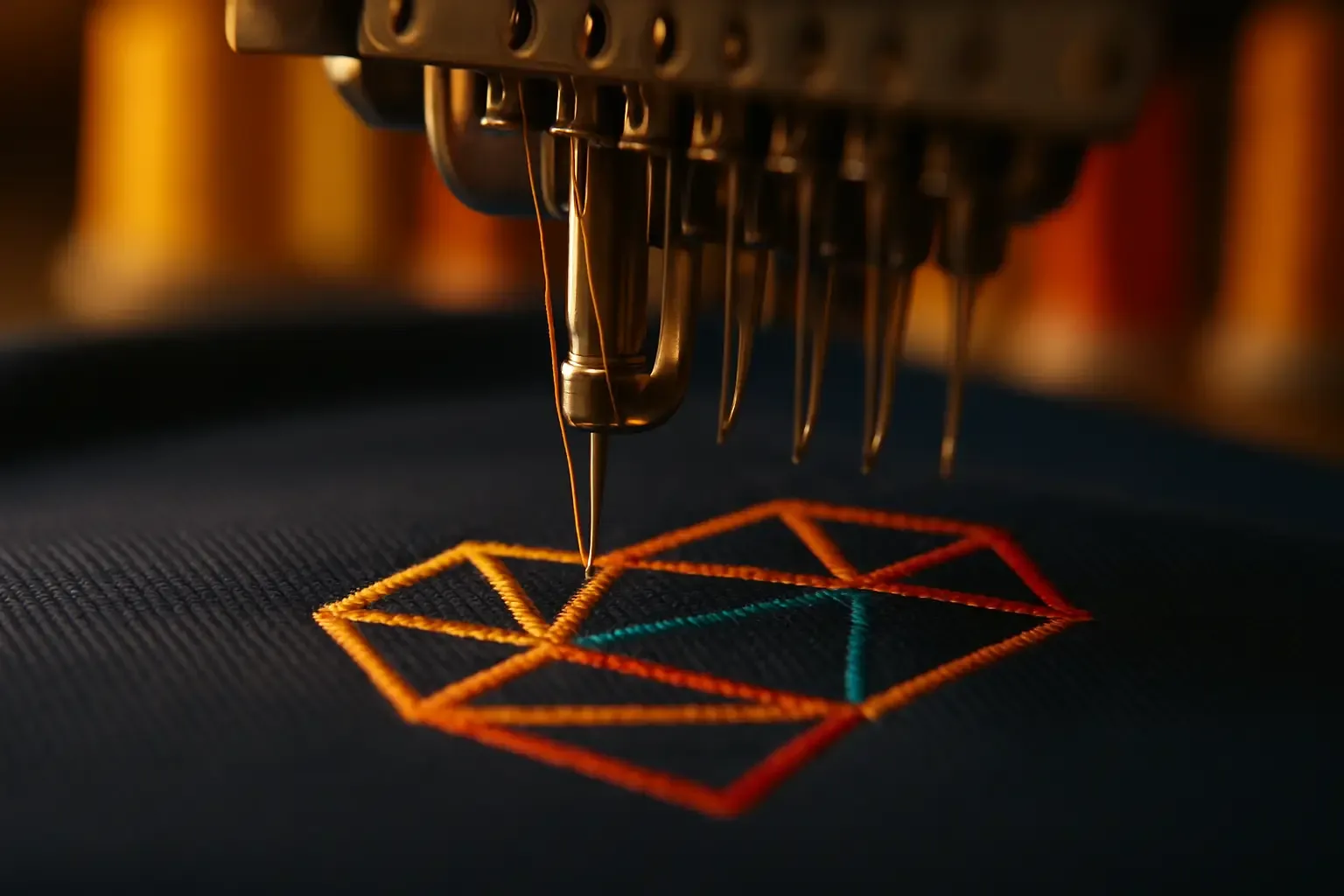
Embroidery creates a logo by stitching thread into the fabric with special machines. It is the technique with the highest perception of corporate prestige. It has a three-dimensional, tactile quality and, when applied properly, withstands 100+ wash cycles without trouble. It can be applied to all heavier fabrics, such as polo shirts, sweatshirts, jackets, fleeces, caps and wallets.
Advantages: High durability, does not fade, a strong perception of prestige, 100+ Pantone matches in rayon thread.
Disadvantages: It can stiffen thin / jersey fabrics (below 160 g), can make very fine or small-type logos illegible, and costs more per unit than screen printing and transfer.
Recommended use: Polo shirt chest, sweatshirt left chest, jacket front/back, cap front, office tower staff, corporate events, hotel front office, café chain managers.
Transfer Printing: A Flexible Multi-Colour Solution
In transfer printing, a design printed on special transfer paper is moved onto the fabric with a heat press. It is the best method for multi-colour, gradient and photo-like logos. There is no limit on colours; complex logos can be produced even in small quantities.
Advantages: Multi-colour logos, fine detail, economical in small quantities, compatible with dry-fit and performance fabrics.
Disadvantages: It sits on one spot as a solid mass and does not let air through, which increases sweating in hot environments. Washing at high temperatures (60 °C+) wears the transfer.
Recommended use: Event T-shirts, call centres, seasonal retail campaign clothing, dry-fit site T-shirts.
Screen Printing: The High-Quantity Classic
In screen printing, a screen is prepared for each colour and the ink is pressed onto the fabric. For orders of 500+ pieces, it is the method with the lowest unit cost. It is ideal for one- or two-colour corporate logos. It is highly resistant to washing and adds no extra weight to the fabric.
Advantages: Low unit cost (at high quantities), control over gloss or matt colour, excellent adhesion on cotton fabric, withstands 80+ washes.
Disadvantages: Screen costs rise as the number of colours increases (each colour needs its own screen), gradients are difficult, and it does not hold or breaks down on dry-fit and synthetics.
Recommended use: Factory production, logistics warehouses, parcel and courier services, kitchen staff, runs of 500+ pieces, simple corporate logos in 1–3 colours.
DTG (Direct to Garment): Digital Printing on Cotton
The DTG method prints digitally, directly onto cotton fabric. The ink soaks into the fabric's fibres; it does not sit on the surface like a transfer. It produces photo-quality prints in unlimited colours.
Advantages: Unlimited colours, photographic realism, a breathable fabric feel, economical in small quantities.
Disadvantages: It can only be applied to cotton or high-cotton fabric, printing on a dark background needs an extra white layer, and at high quantities the unit cost stays higher than screen printing.
Recommended use: 100–300 cotton T-shirts, multi-colour corporate campaigns, special collections, artistic images.
Sublimation: The Champion for Polyester and Dry-Fit
In sublimation, a special dye enters the polyester fibre as a gas under heat. The fabric and the print become one; you cannot feel the print when you touch it. It is only applied to white or light-coloured polyester/dry-fit fabric.
Advantages: Does not fade or crack, does not affect breathability, unlimited colours, unlimited wash resistance.
Disadvantages: Only works on polyester/synthetic fabric, cannot be applied to cotton, cannot be applied directly to a dark background.
Recommended use: Dry-fit site T-shirts, seasonal T-shirts for private security, couriers, sportswear, outdoor staff.
Methods Compared
| Method | Min. quantity | Wash resistance | Number of colours | Best fabric |
|---|---|---|---|---|
| Embroidery | 50+ | 100+ washes | 1–12 colours | Piqué, fleece, jackets, caps |
| Transfer printing | 20+ | 40–60 washes | Unlimited | All fabrics |
| Screen printing | 100+ | 80+ washes | 1–6 colours | Cotton, blends |
| DTG | 20+ | 50–70 washes | Unlimited | Cotton |
| Sublimation | 50+ | Unlimited | Unlimited | Polyester, dry-fit |
Method Recommendations by Sector
Office towers, holding companies and tech offices: embroidery (prestige) — polo chest. Restaurant/café chain front of house: embroidery — polo chest; kitchen: screen or transfer printing. Hotel chains: embroidery for front office and F&B, screen printing for housekeeping. Factories, production facilities, logistics: screen printing (high quantity, low unit cost). Parcel services and warehouses: screen printing or transfer. Healthcare chains: transfer or DTG for a small chest logo; embroidery where kitchen-like hygiene applies. Private security: transfer printing (for large back lettering). Retail chains: depends on the campaign; DTG or transfer for seasonal graphics, embroidery for the classic logo.
Logo Placement and Size Standards
Polo shirt chest embroidery: ideally 7–9 cm wide. Sweatshirt left chest: 8–10 cm. Jacket back: 20–25 cm. Cap front: 5–6 cm. T-shirt centre-front transfer: 25–30 cm. A very small logo (under 3 cm) loses its detail in embroidery; transfer or DTG is recommended. For a very large logo (over 40 cm) on the back, screen printing is the most suitable method.
Pantone Colour Matching and Brand Consistency
Corporate buyers are sensitive about keeping their brand colours. For embroidery, rayon and polyester threads matching 1,000+ Pantone colours are available. In screen printing and transfer, inks are mixed to the Pantone Coated/Uncoated guide. In sublimation, Pantone is simulated through CMYK. At Mars Wear, colour consistency is ensured for every batch through a pre-print sample approval process. A custom Pantone colour request needs a minimum of 200 pieces and 1–2 weeks of extra production time.
Caring for Logos and Prints
The common care for all methods: wash below 40 °C, wash inside out, avoid the tumble dryer, and do not iron directly over the print or embroidery. Fabric softener is not recommended for transfer prints. For a detailed care guide, see our Workwear Care Guide page. For more on choosing fabric, the Fabric Guide will be useful.
The Mars Wear Logo Application Standard
At our facility in Zeytinburnu, Istanbul, Mars Wear carries out embroidery, transfer, screen printing, DTG and sublimation all in our own workshop. Minimum order 100 pieces, standard delivery 15 working days, express production 10 working days. A vector logo file (AI, EPS, PDF) is requested; raster files (JPG, PNG) can be adapted at low resolution. Size range XS–5XL, with special sizes of 6XL+ possible.
Frequently Asked Questions
Should embroidery or screen printing be preferred?
Embroidery for corporate prestige and a long life; screen printing for an economical, simple logo on 500+ pieces.
What printing is used on a dry-fit T-shirt?
Sublimation (on a white or light background) or transfer printing is recommended. Screen printing does not hold, and embroidery stiffens the fabric.
What is the most common reason a logo peels in the wash?
Washing above 60 °C, tumble drying and using fabric softener. With the right care, every method withstands 50+ washes.
Which method is recommended for a multi-colour logo?
For more than 4 colours: transfer printing, DTG or sublimation. Screen printing costs a screen per colour.
What is best for small type?
DTG and transfer printing give the sharpest detail for small type; in embroidery, type below 5 mm can be illegible.
Is embroidery possible at the minimum order?
Every method is applied from 100 pieces upwards. At Mars Wear, 100 pieces is the standard starting quantity for embroidery.
Do you send a sample logo?
During the corporate quotation process, a digital simulation is provided, and a physical sample on one piece before bulk production.
Is the Pantone colour match guaranteed?
With a vector logo + Pantone code, a 100% match is achieved. Custom Pantone colour production applies from a minimum of 200 pieces.
Keep reading
 Workwear Guides
Workwear Models (Category Guide)
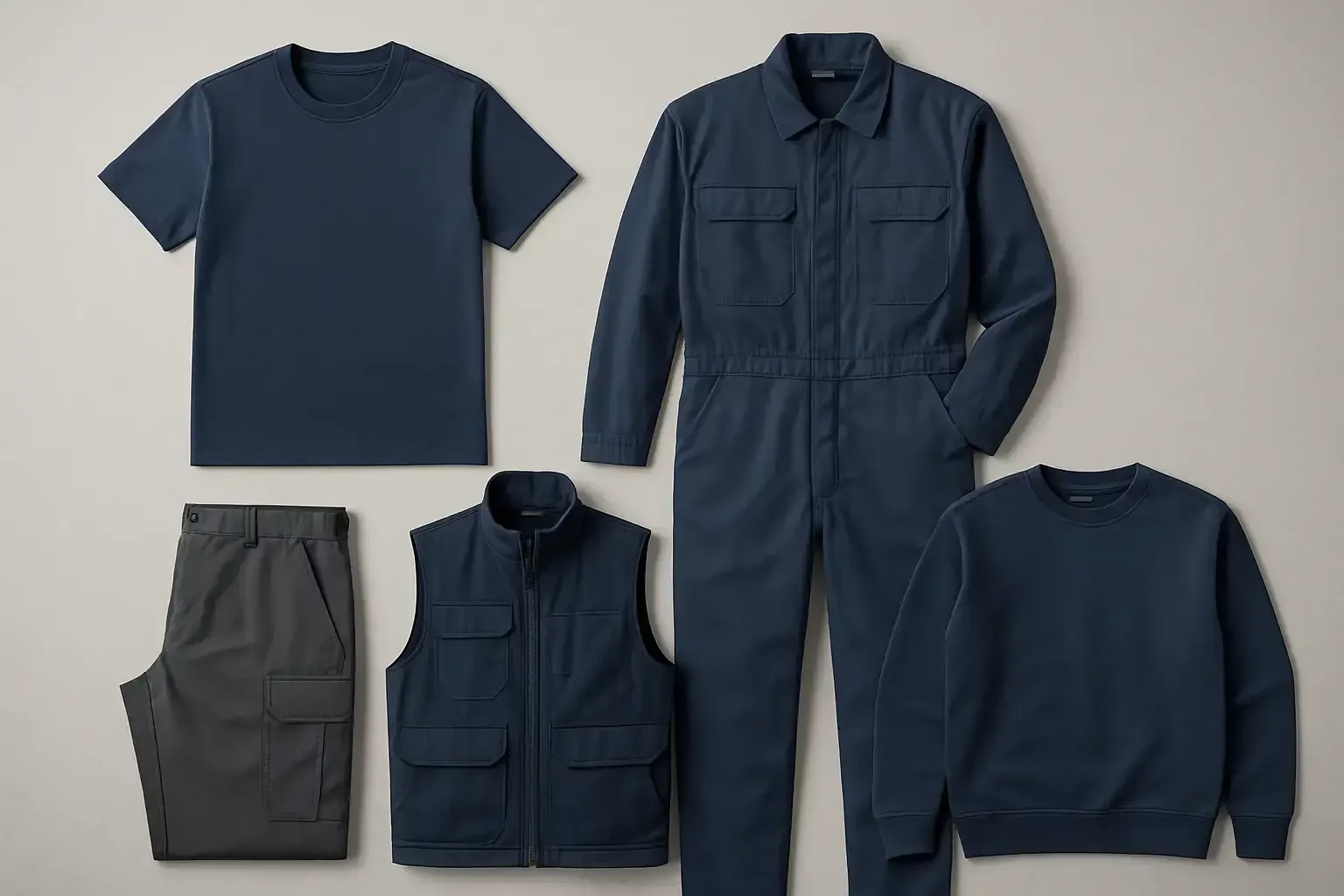
Workwear models: T-shirts, trousers, coveralls, gilets and sweatshirts. A guide to choosing by use, fabric and weight. Get a quote for logo production.
 Workwear Guides
Bulk Logo Workwear Production (Min. 100)
Bulk logo workwear and work clothing manufacturing from 100 pieces. Sampling, fabric, production and a 15-working-day delivery process. Get a quote.
 Workwear Guides
Workwear Prices and Cost Guide
Workwear prices vary with fabric, weight, printing and quantity. Learn the logic of tiered costs and get a net price quote for your project.