













Work Apron Sector Guide: Colour, Fabric and Corporate Use Standards
What Is a Work Apron? A Definition for Corporate Use
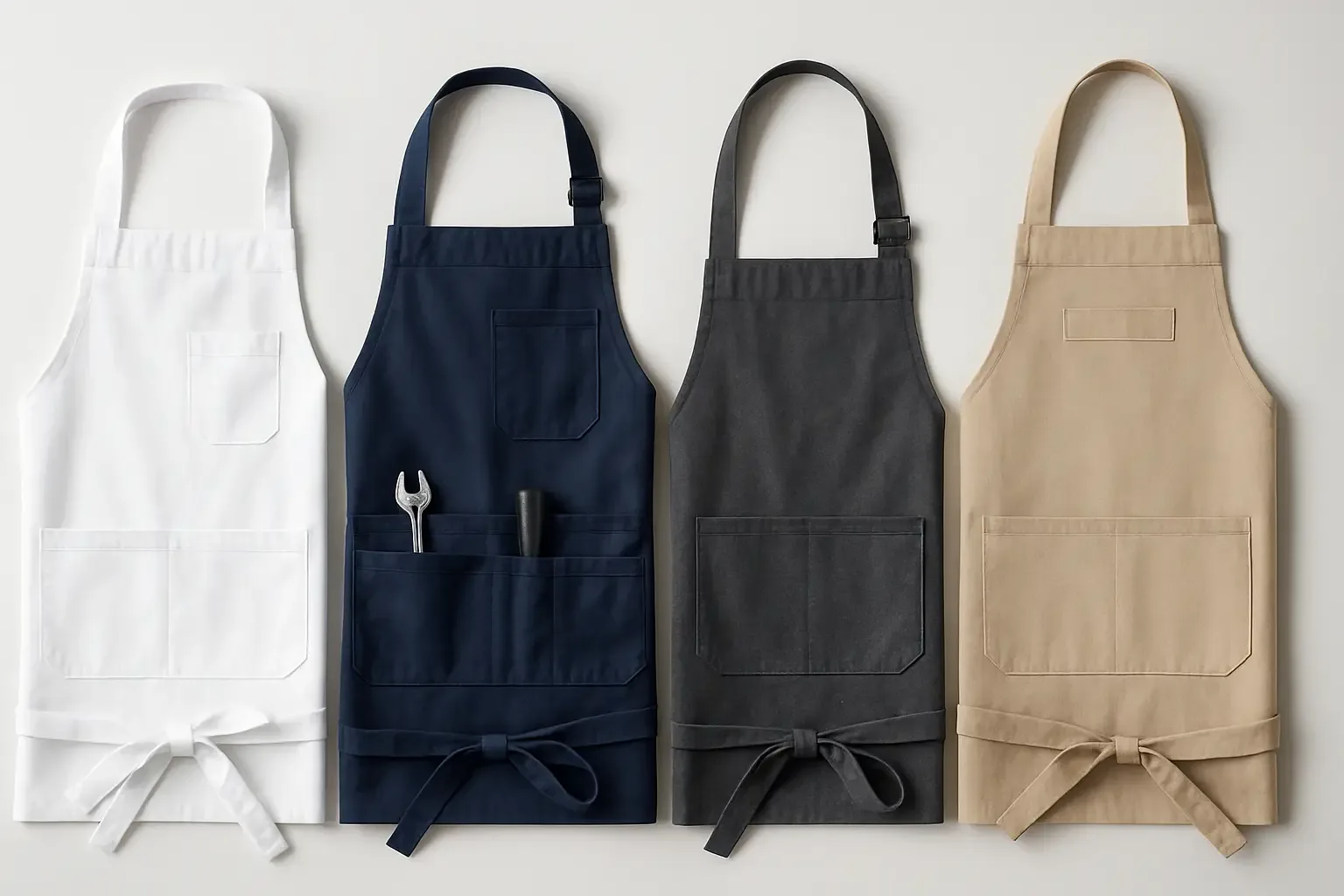
A work apron is a functional garment that protects the clothing underneath, covers the front of the body and usually has pockets and accessories. For hospital admin teams, food production facilities, pharmacy chains, hair and beauty brands, textile factories, laboratories and technical service teams, it is a core item that provides hygiene, brand identity and operational efficiency.
The work apron does not belong only to the HoReCa (hotel–restaurant–café) sector. Multi-location hospital groups, national pharmacy chains, food production facilities and large textile factories buy annually with orders of 100+ pieces. In this guide we look in detail at use by sector, colour standards, fabric choice and the corporate supply process.
Mars Wear offers corporate work apron production on request; the minimum order is 100 pieces, and an annual framework agreement option is available.
Work Apron Styles
Three main work apron styles are common, depending on sector and function:
1. Full-Length Apron (Bib Apron)
- Construction: Full length, from the chest to below the knee
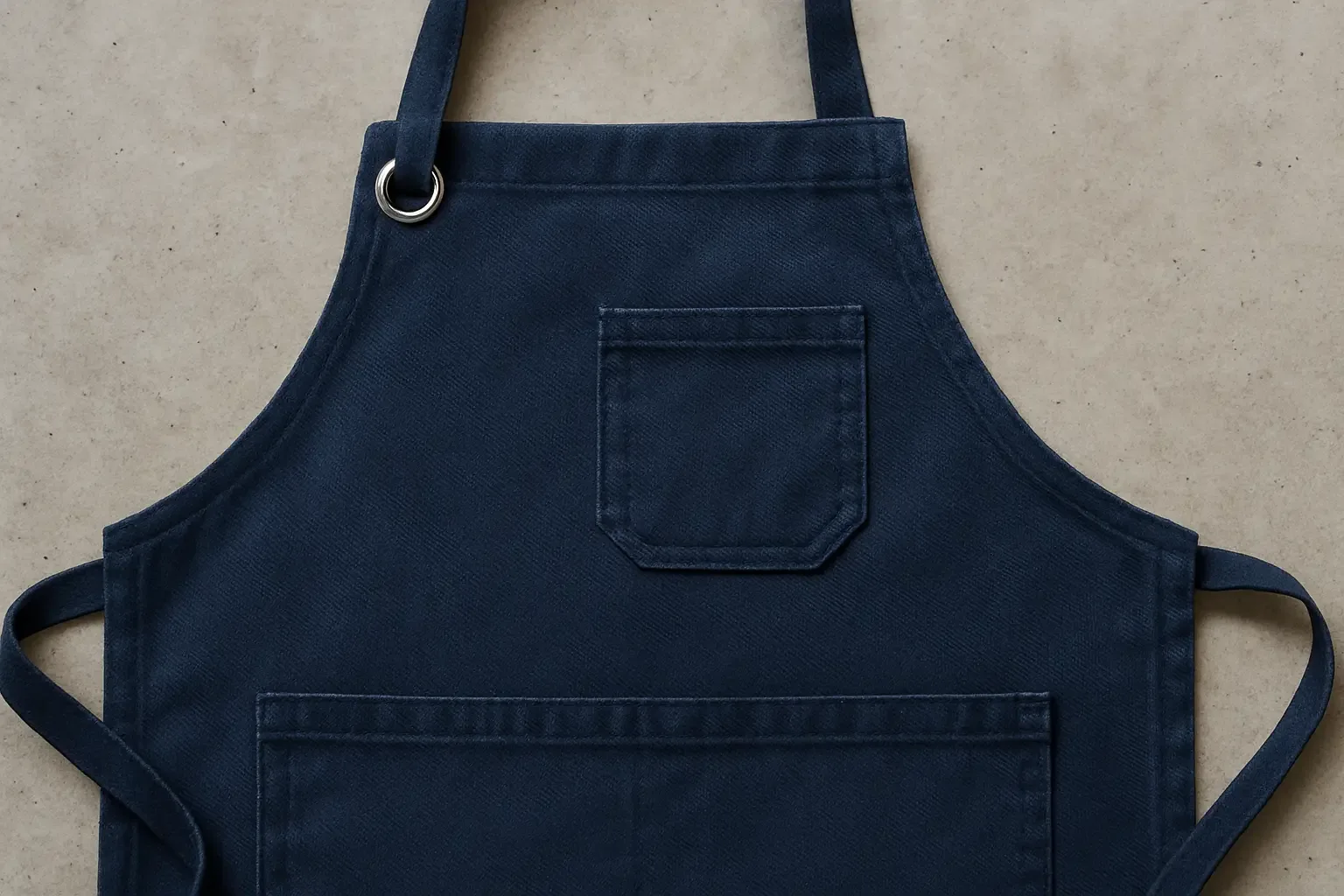
- Neck strap: Adjustable or fixed
- Pockets: 1–3 pockets (chest + lower)
- Typical use: Hospital admin, pharmacies, hairdressers, food production, laboratories
2. Waist Apron (Half Apron)
- Construction: From the waist to above the knee
- Fastening: Secured with a waist tie
- Pockets: 2–4 front pockets
- Typical use: Service staff, light technical service
3. Cross-Back Apron (Japanese Style)
- Construction: A cross-over strap system on the back instead of around the neck
- Advantage: Prevents neck pain, suitable for long hours
- Typical use: Hairdressers, beauty salons, settings that call for an ergonomic design
Work Apron Use by Sector
Hospital Chains (Admin and Service Staff)
In hospital groups, the work apron is used as a standard garment for staff in reception, registration, the pharmacy, guiding patients' relatives and laboratory support.
- Recommended colours: White (a clinical shade), light blue (calming), pastel green (a surgical shade)
- Fabric: Antibacterial poly-cotton blend (for frequent washing)
- Certification: OEKO-TEX Standard 100, HACCP compatible
- Logo: Left chest embroidery + name badge pocket
- Hygiene: Fabric that withstands washing at 60 °C is essential
Details: see the antibacterial fabric section of the Fabric Guide.
Food Production and Ready-Meal Facilities
In food production facilities that meet the HACCP standard, all production line staff wear work aprons.
- Recommended colour: White (for hygiene, as an indicator of dirt)
- Fabric: Antibacterial cotton that withstands washing at 90 °C
- Pockets: Usually no pockets (risk of foreign-body contamination)
- Fastening: No metal accessories (risk of getting into food) — sewn ties only
- Certification: HACCP, ISO 22000, BRC Food
Pharmacy Chains
National pharmacy chains (50+ branches) use a standard apron for staff.
- Recommended colours: White or light green (the traditional pharmacy colour)
- Fabric: 200 g poly-cotton blend
- Pockets: 2–3 pockets (pen, name badge, small products)
- Logo: Left chest and back embroidery
- Neck: Adjustable (practical for shift rotation)
Hairdressing, Beauty and Barber Chains
For premium hairdressing chains and beauty brands, the work apron is part of the corporate identity.
- Recommended colours: Black (hides hair dye), anthracite, the brand colour
- Fabric: Cotton with a water-repellent (DWR) surface, stain resistant
- Construction: Cross-back (ergonomic for long hours)
- Pockets: Multiple pockets (scissors, hairdryer, pen)
- Logo: Premium embroidery (chest + back)
Textile Factories (Production Lines)
On textile production lines, aprons are used to reduce the risk of yarn or parts catching and to protect clothing.
- Recommended colours: Navy, anthracite (show dirt less)
- Fabric: 200 g poly-cotton blend (hard-wearing)
- Pockets: 2–3 pockets (scissors, pen, parts)
- Construction: Full length (full protection for clothing)
Laboratories and Pharmaceutical Production
A special apron standard applies in pharmaceutical production, clinical laboratories and chemistry laboratories.
- Recommended colour: White (the classic laboratory standard)
- Fabric: 100% cotton (chemical resistance) or a flame-retardant (FR) version
- Pockets: Multiple pockets, with flaps (keeps dust out)
- Construction: Long-sleeved coats are common (arm protection)
- Certification: OEKO-TEX, and EN 13034 (protection against chemical splashes) where needed
Technical Service (Appliances, Electronics)
Technical staff going to customers' premises for service use a work apron to protect sofas, carpets and the customer's home.
- Recommended colour: The brand colour (navy, blue)
- Fabric: Blended fabric with high stain resistance
- Pockets: Tool pockets (screwdriver, multimeter, small parts)
- Construction: A waist apron is more practical (freedom of movement)
Fabric Choice and Weight
| Fabric | Weight | Sector | Advantage |
|---|---|---|---|
| 100% cotton | 180–200 g | Hospitals, laboratories, pharmacies | Breathable, chemical resistance |
| Cotton-polyester 50/50 | 200–220 g | Food production, textile factories | Shrinks little, hard-wearing |
| Antibacterial cotton | 200 g | Healthcare, food, where HACCP is mandatory | Silver-ion hygiene |
| Water-repellent (DWR) cotton | 200 g | Hairdressers, beauty, workshops | Stain resistance |
| FR flame-retardant | 250 g+ | Welding, chemicals, metal | Protection from flame exposure |
| Polyester (light) | 140–160 g | Events, seasonal campaigns | Economical, quick-drying |
Choosing a Colour: What Colours Mean by Sector
| Colour | Sector perception | Typical use |
|---|---|---|
| White | Hygiene, clinical, professionalism | Hospitals, pharmacies, food production |
| Light blue | Calm, trust (hospitals) | Hospital admin, clinical support |
| Pastel green | The surgical colour, health | Hospital technical staff, theatre support |
| Black | Premium, hides stains | Hairdressers, beauty, premium service |
| Anthracite / dark grey | Modern corporate | Technical service, factories |
| Navy | Trust, corporate authority | Pharmacies, technical service, factory admin |
| Burgundy / wine | Warm, prestigious | Restaurant and café service (chain brands) |
| Beige / cream | Natural, classic | Hotel chains, premium corporate |
| Brand Pantone | Corporate identity | Chain brands (min. 200 pieces) |
Logo and Embroidery Application
Logo options applied to work aprons:
- Left chest embroidery: The most common, a premium look, withstands 200+ washes.
- Back print: The brand name or department ("Pharmacist", "Hairdresser"). Transfer or screen printing.
- Name badge pocket: A Velcro or clear pocket at the top of the left chest — for the staff member's name card.
- Promotional sticker: For temporary campaigns.
- Sewn-in label: Collar or inner label (dry-cleaning instructions).
Detailed logo comparison: Logo Printing and Embroidery Methods Guide
Pocket Configuration
| Position | Purpose | |
|---|---|---|
| Chest pocket | Top of the left chest | Pen, name badge |
| Large lower pocket | Below the waist, centre front | Phone, small tools |
| Side pocket | Right/left side | Notebook, paperwork |
| Divided pocket | Lower front, two compartments | Money, receipts (service) |
| Tool pocket | Side (for technical service) | Screwdriver, multimeter |
| Pen holder | Side of the left chest | Holds a pen |
Important note: Food production aprons have no pockets and no metal accessories — to prevent the risk of foreign-body contamination.
Fastening Systems
- Neck strap (fixed): Quick to put on, economical. Drawback: neck pain with long use.
- Neck strap (adjustable): Suits staff of different heights. A buckle, clip or half button.
- Cross-back strap (Japanese style): Spreads neck strain across the back. Ideal for premium hairdressers and long shifts.
- Waist tie: The standard fastening. A double tie is more durable.
- Velcro / hook-and-loop waist: Quick fastening. For hygiene-critical settings (changed every shift).
- Metal grommet: Reinforcement for the waist tie (premium production).
Standard Sizes
| Size | Width | Length | Recommended use |
|---|---|---|---|
| S | 70 cm | 80 cm | Standard women's, waist apron |
| M | 75 cm | 85 cm | Standard adult |
| L | 80 cm | 90 cm | Adult men's |
| XL | 85 cm | 95 cm | Larger-build adult |
| 2XL+ | 90+ cm | 100+ cm | Special sizes on request |
Mars Wear production takes orders in two ways: one size or multiple sizes. One size is extended with the adjustable neck strap version.
Washing and Care
The life of a work apron depends directly on the quality of care:
- Hospitals / food: High-temperature washing at 60–90 °C (hygiene)
- Hairdressers / beauty: 40 °C gentle cycle (pre-treat dye stains)
- Technical service: 40 °C, pre-treat oil stains first
- Pharmacies / admin: 30–40 °C standard cycle
- Antibacterial aprons: No fabric softener
- Water-repellent aprons: No bleach, periodic DWR renewal
Details: Workwear Care Guide
Annual Consumption and Budget Planning
Annual apron consumption per staff member by sector:
| Sector | Per staff member per year | Reason for replacement |
|---|---|---|
| Hospital admin | 6–8 | Frequent washing, hygiene |
| Food production | 10–12 | Daily changes, high-temperature washing |
| Hairdressing, beauty | 4–6 | Hair dye, chemical damage |
| Pharmacies | 3–4 | Moderate use |
| Technical service | 2–3 | Damage and wear from dirt |
| Laboratories | 4–6 | Chemical splashes, frequent washing |
| Textile factories | 3–4 | Abrasion |
For hospital admin staff of 100 people, annual consumption of 600–800 aprons is expected.
Supplying Multiple Locations
Factors chain brands consider when supplying work aprons to multiple branches or locations:
- Packing by location: The size breakdown in a separate box for each branch.
- Brand colour matching: Pantone-based corporate colour from 200 pieces.
- Department distinction: Reception white, cashiers navy, technical grey.
- Name labels: A custom label with each staff member's name.
- Reserve stock: Keeping 10% spare aprons at each branch.
Through an annual framework agreement, Mars Wear provides coordination from a single point for chain brands' operations of 50+ branches.
Certificate Requirements
Certificates frequently requested by sector:
- OEKO-TEX Standard 100: Healthcare, food, pharmacies (international standard)
- HACCP compliance: Mandatory for food production aprons
- ISO 22000: Food safety management system
- BRC Food: For export food supply
- EN 13034: Against chemical splashes (laboratories)
- EN 14116: FR flame-retardant (welding, chemicals)
Details: OEKO-TEX Standard 100 Guide
Price Range and Ordering Process
| Apron type | Price range |
|---|---|
| Standard polyester apron | TRY 80–120 |
| Poly-cotton blend | TRY 120–180 |
| 100% cotton premium | TRY 180–250 |
| Antibacterial cotton | TRY 200–280 |
| OEKO-TEX certified | TRY 220–320 |
| FR flame-retardant | TRY 320–450 |
Logo embroidery adds TRY 20–40 per piece, a back print TRY 15–30 per piece. The minimum order is 100 pieces; tiered bulk discounts apply from 500 pieces.
Frequently Asked Questions
In which sectors are work aprons used?
Hospitals (admin + service), food production, pharmacy chains, hairdressing and beauty, textile factories, laboratories, technical service and restaurant and hotel staff are the most common sectors.
When is an antibacterial apron mandatory?
In food production facilities with HACCP and ISO 22000 standards, in hospital sterilisation units and in clinical laboratories, an antibacterial apron is a legal requirement.
Why are white aprons common in hospitals and the food sector?
White shows dirt immediately, making hygiene control easier. White can also be combined with a poly-cotton blend that withstands washing at 90 °C.
Is an apron with pockets suitable for food production?
No. To prevent the risk of foreign-body contamination, HACCP standards ban pockets on food production aprons. Only admin staff outside the production line can use aprons with pockets.
Why is a cross-back apron preferred?
A cross-over strap on the back instead of a neck strap reduces neck strain. It gives an ergonomic advantage for hairdressers, beauticians and barbers working long shifts (8+ hours).
What is the minimum order?
At Mars Wear, the minimum order for work aprons is 100 pieces. Corporate Pantone colours and OEKO-TEX certified aprons need a minimum of 200 pieces, with 1–2 weeks' extra time.
Is the neck strap adjustable?
It is fixed in standard production; an adjustable strap (buckle or half button) is added on request. A cross-back strap is the most comfortable option.
Is embroidery or print recommended for the logo?
Embroidery for the left chest (200+ washes, a premium look). Transfer printing for the back (large area, many colours). Details: Logo Printing Guide.
How many washes does an apron last?
A premium 100% cotton apron lasts 50–80 washes, a blended fabric 100+ washes. An antibacterial finish keeps 95%+ effectiveness after 60 washes.
Do you produce corporate Pantone colours?
Yes, Pantone-based corporate colour production is available from a minimum of 200 pieces. It needs 1–2 weeks of extra production time.
Conclusion: Sector + Fabric + Colour = The Right Apron
For a successful work apron supply, three factors should be weighed together: the sector's risk profile (hygiene, chemicals, abrasion), fabric choice (antibacterial, water-repellent, FR) and corporate colour (Pantone compatibility, sector perception).
In corporate work apron production from 100+ pieces, Mars Wear offers sector advice + fabric choice + certificate supply + distribution to multiple locations from a single point. Through an annual framework agreement, predictable supply is provided for hospital groups, pharmacy chains, food production facilities and tech and retail chains.
To order, you can reach us through the quick quote form or on WhatsApp. For types of fabric, see the Fabric Guide; for certified supply, see the OEKO-TEX Guide page.
Keep reading
 Sector Guides
Blue-Collar Staff Workwear: A Guide by Sector
What does blue-collar mean? A sector workwear guide for construction, factory, logistics and supermarket staff. Bulk production with your logo. Get a quote.
 Sector Guides
Supermarket and Retail Staff Uniforms: Polos, Gilets, Aprons
Polo, gilet and apron uniforms for supermarket chain and store staff. Hard-wearing bulk production with your logo, from 100 pieces. Get a quote now.
 Sector Guides
Construction Site Workwear: A Guide to Hi-Vis, Hard Hats and S3 Boots
Hi-vis workwear, hard hats, S3 boots and hard-wearing trousers. EN ISO 20471 compliant site clothing. Production from 100 pieces. Get a quote now.