


 Construction and Site Workwear
Work Jackets and Gilets Factory and Production Workwear Construction and Site Workwear Logistics and Warehouse Workwear Mid-Season Workwear Hi-Vis Workwear
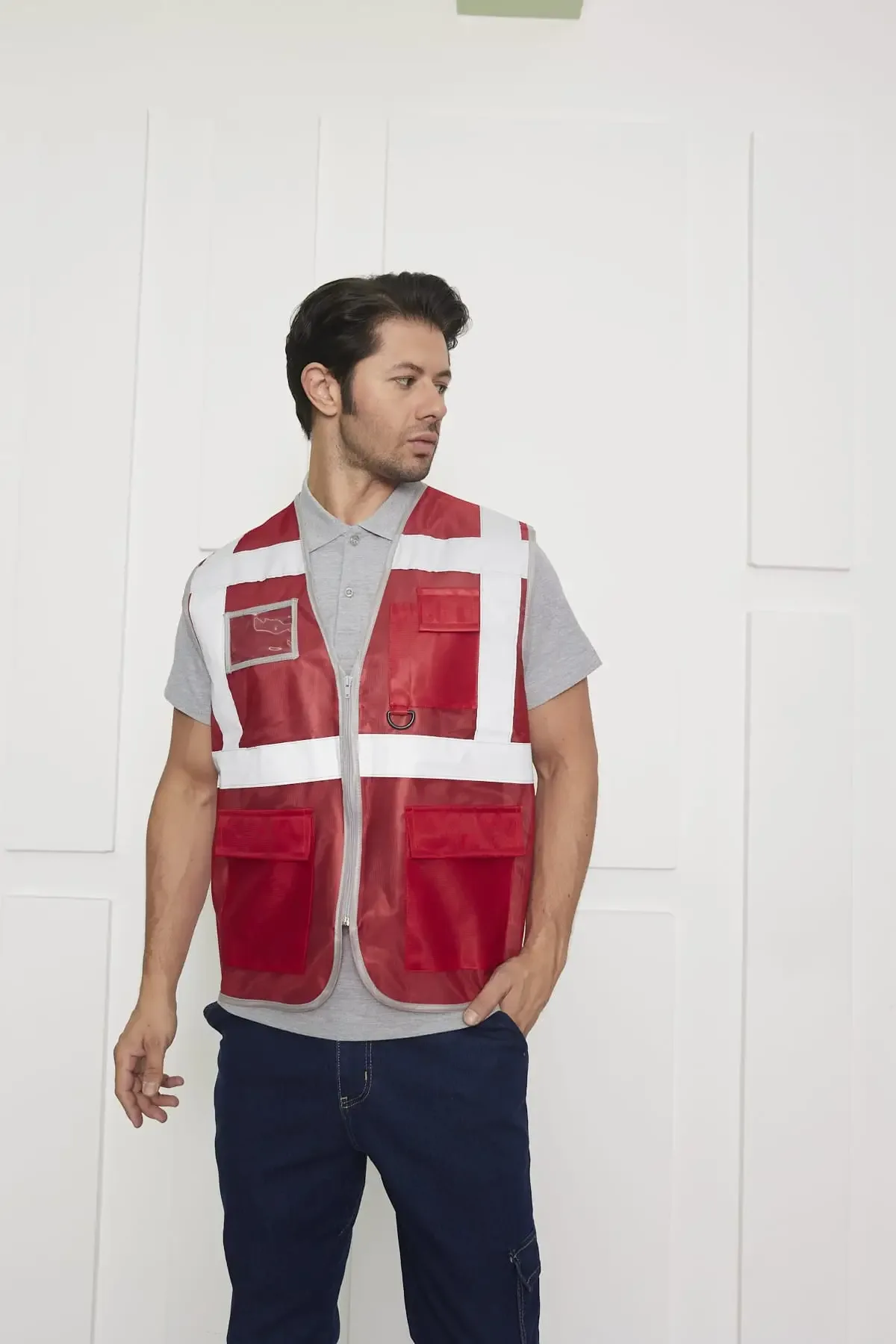
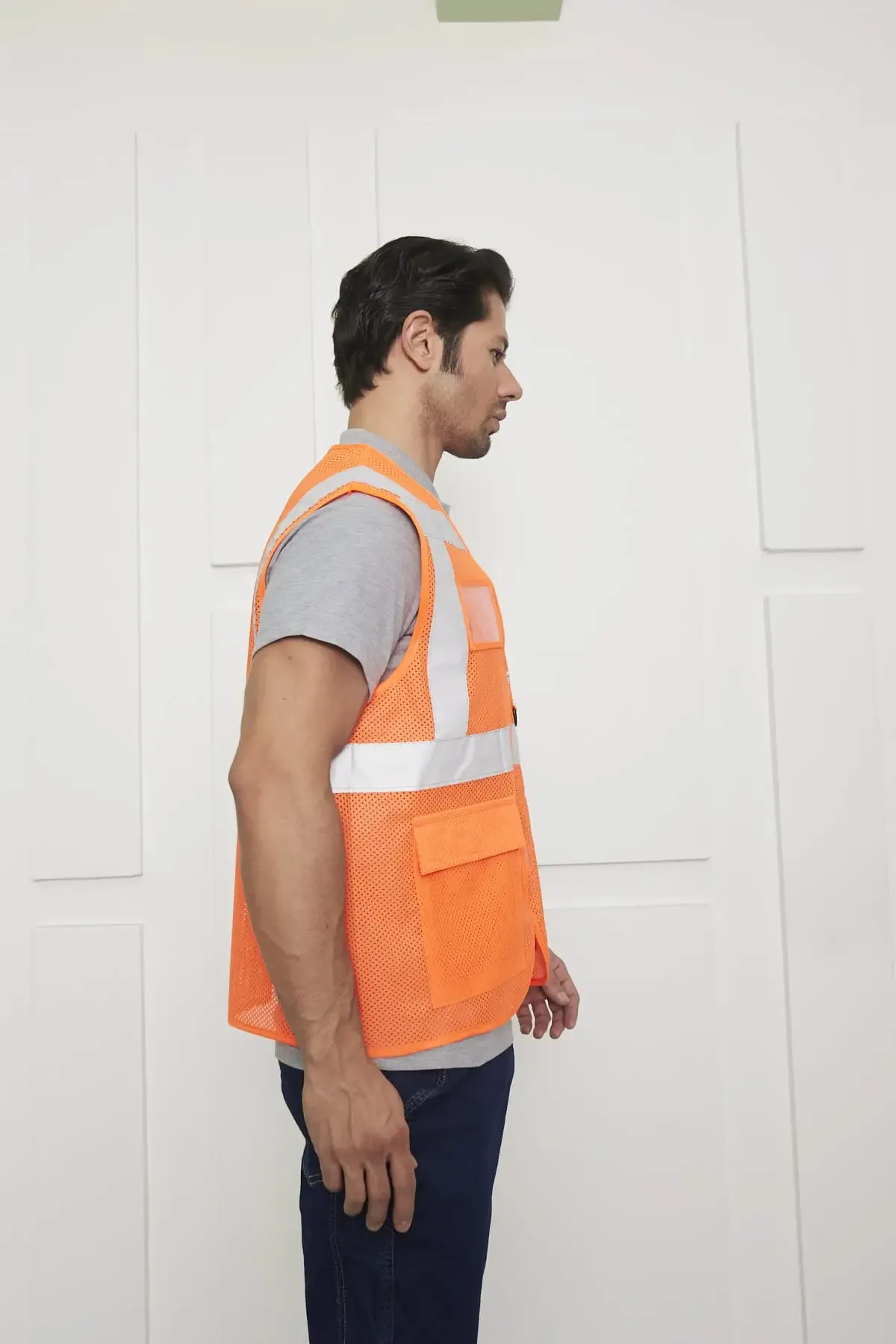
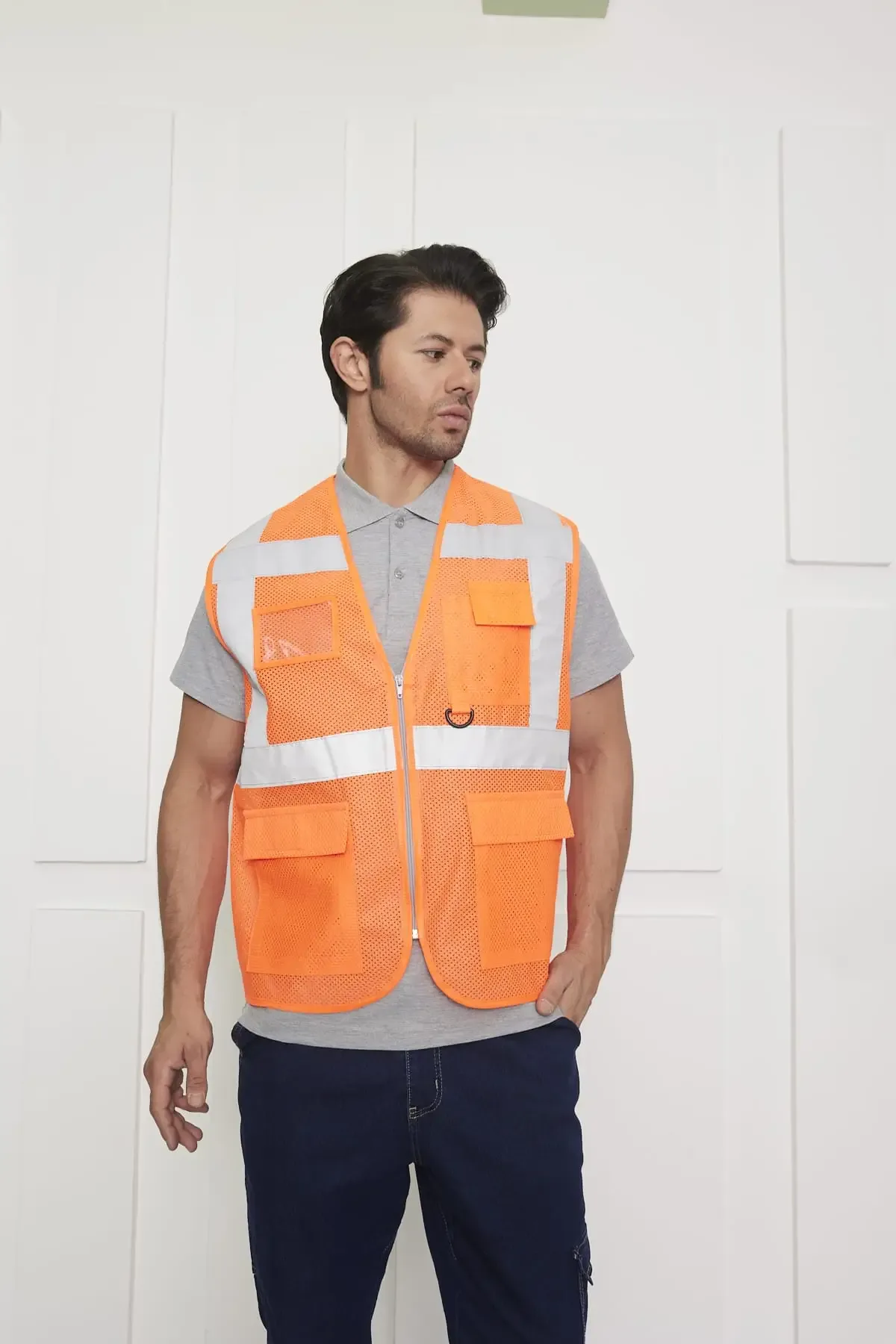
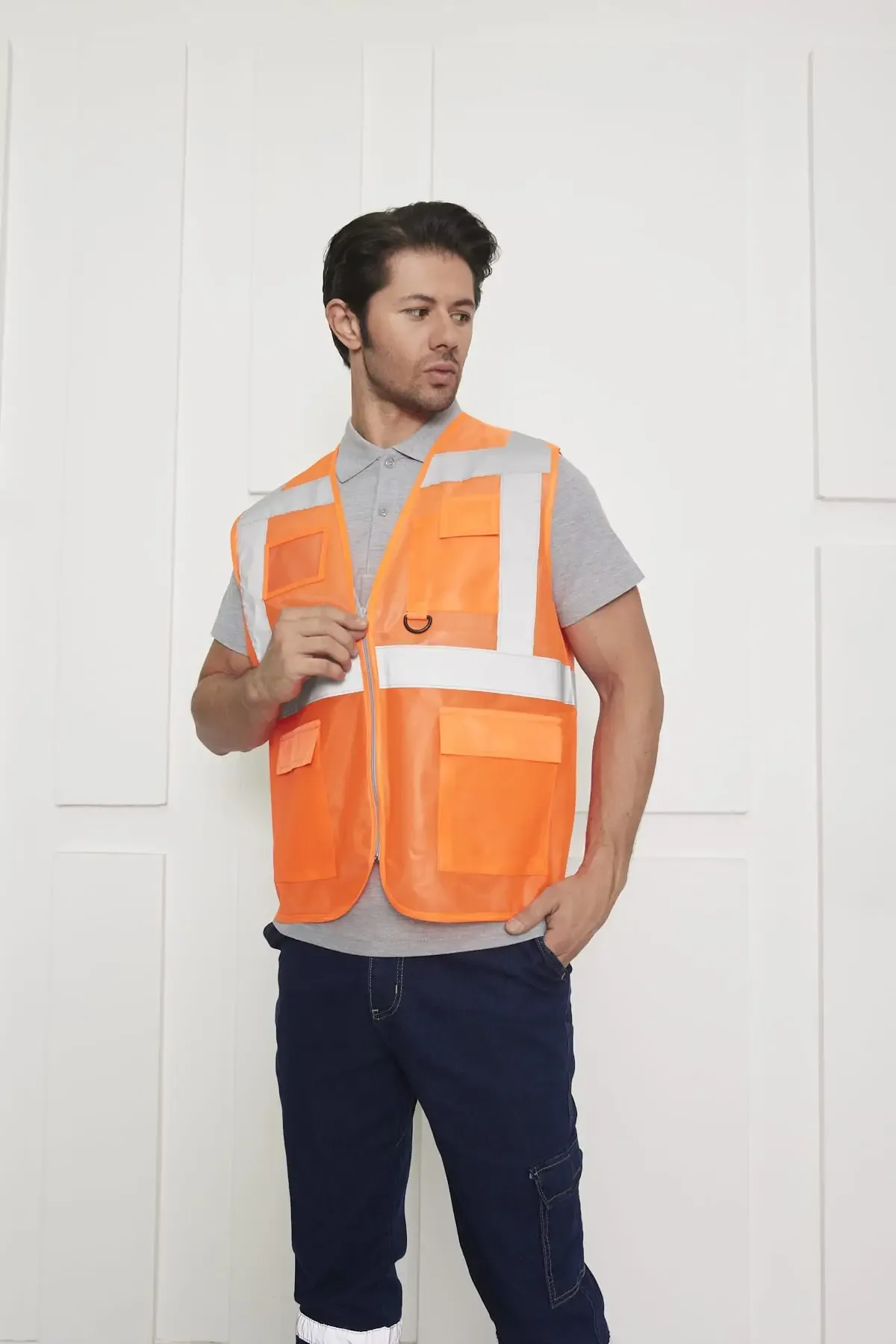
Reflective Engineer's Hi-Vis Vest — With Pockets
SKU · MW-RIYM-001
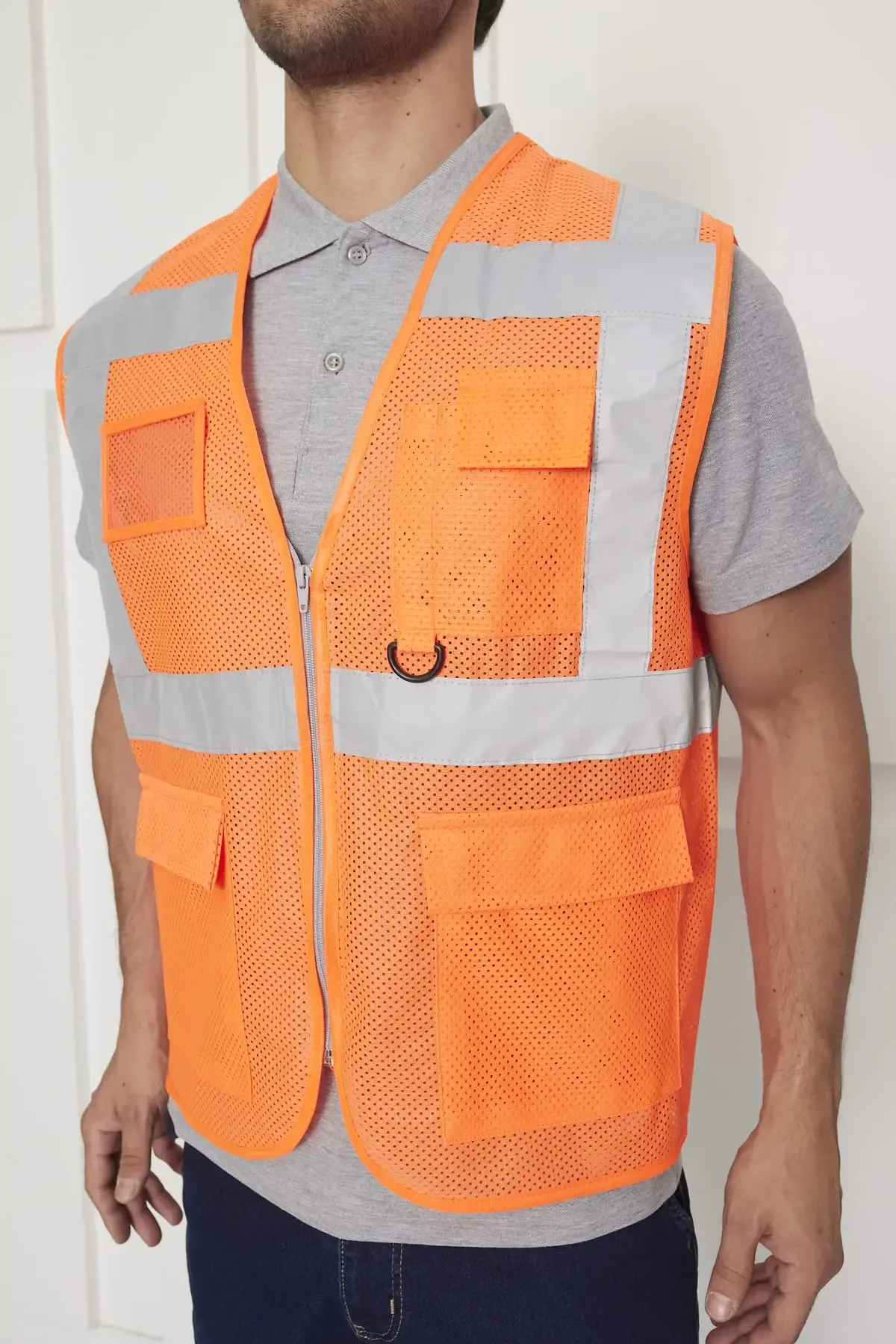
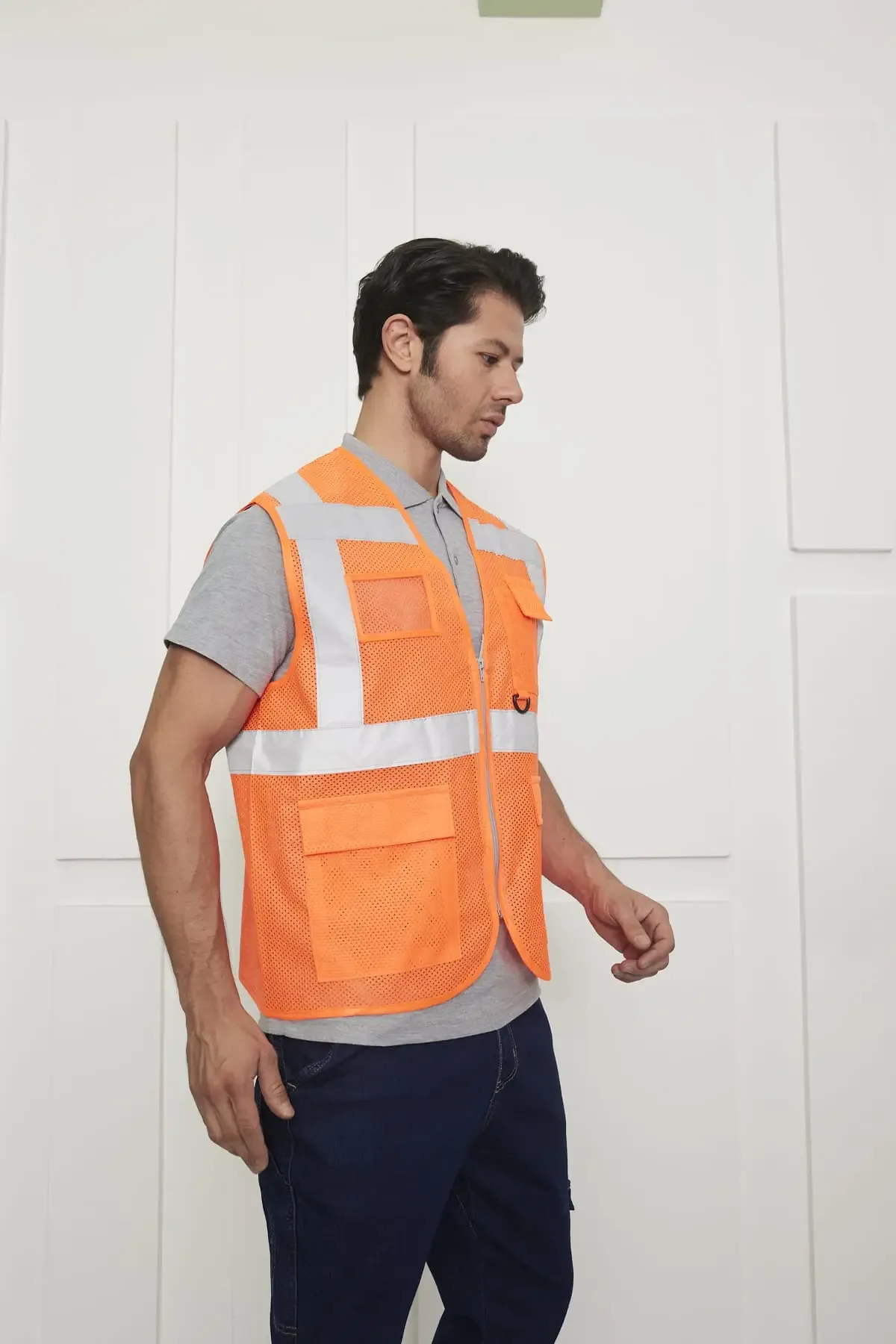
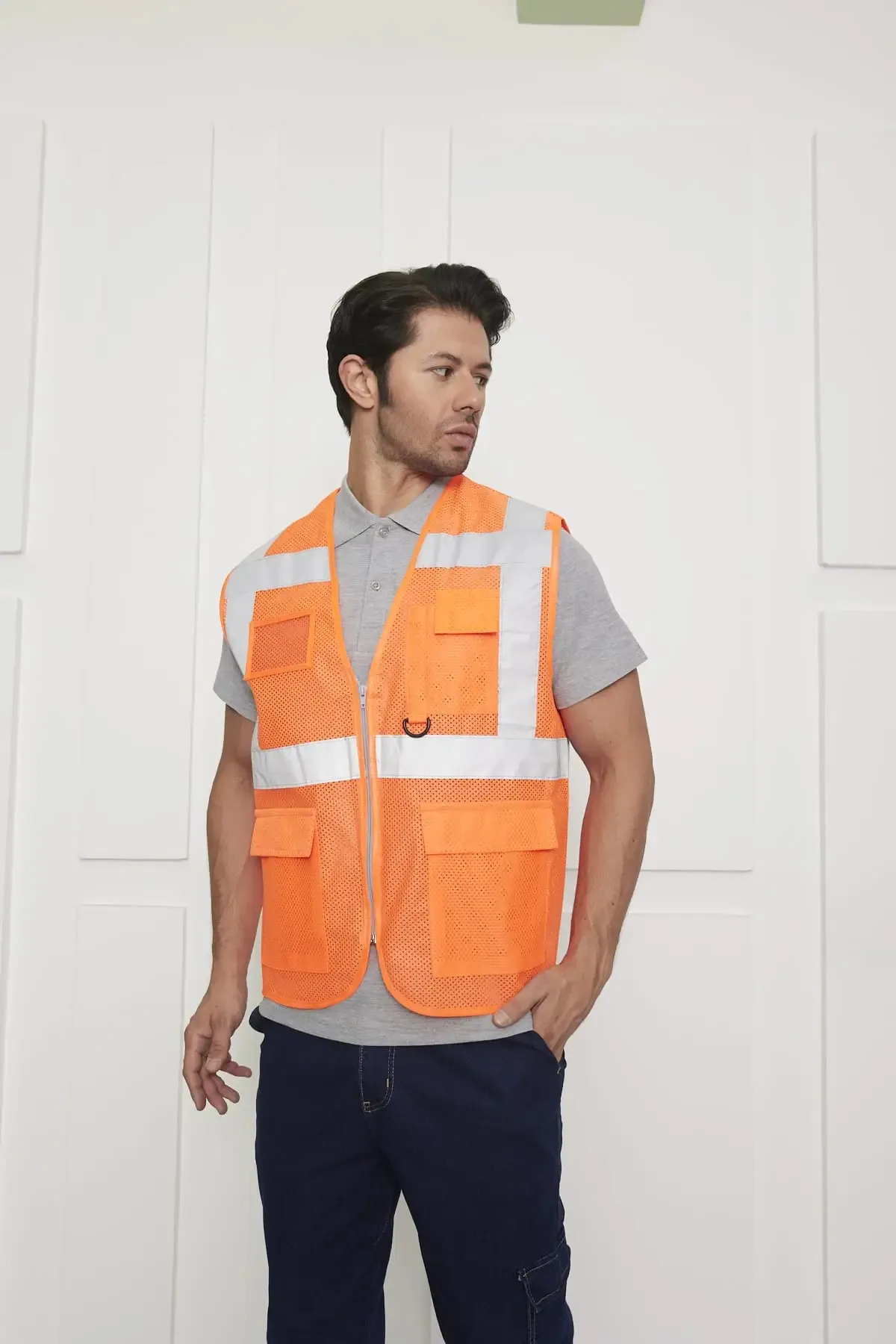
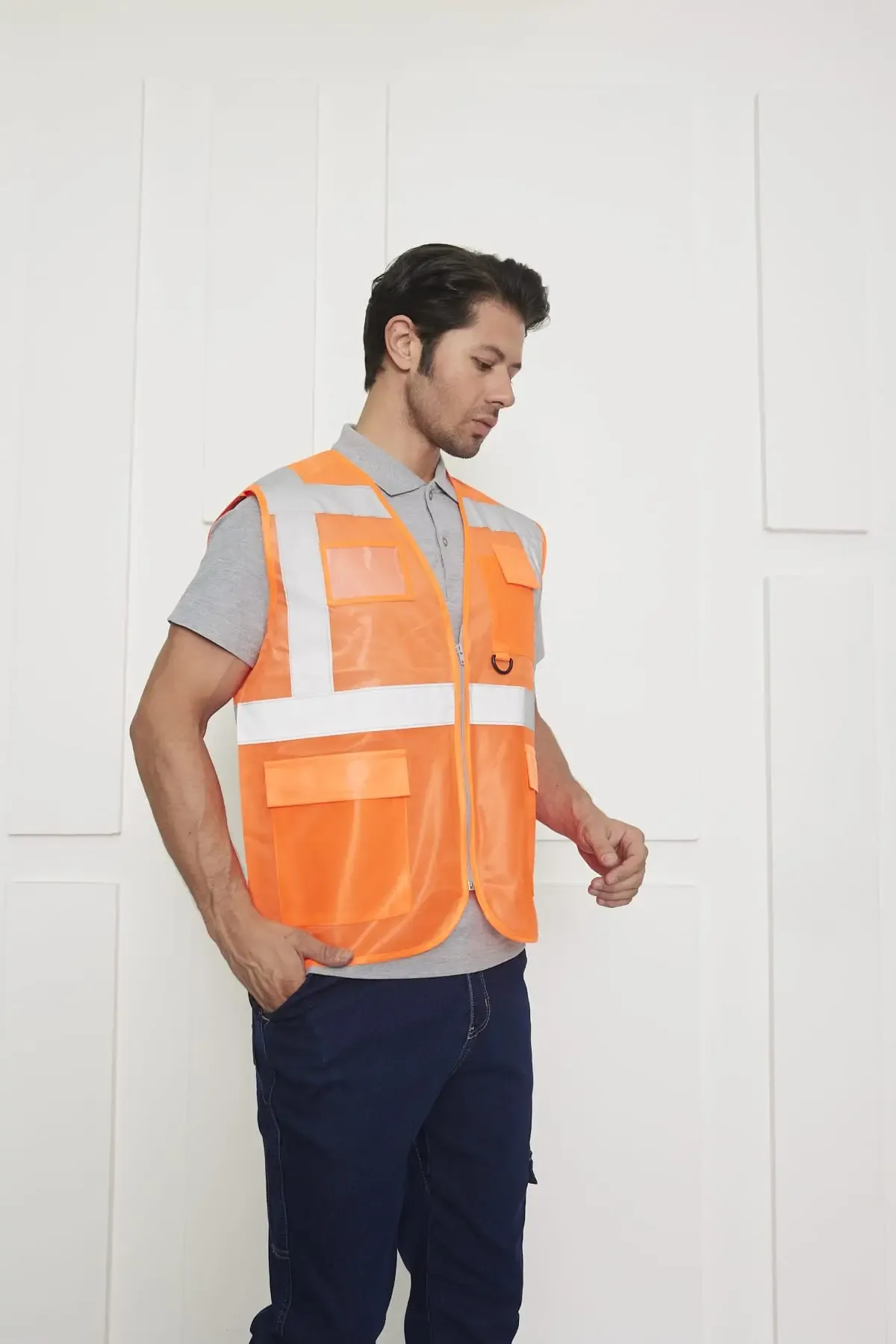
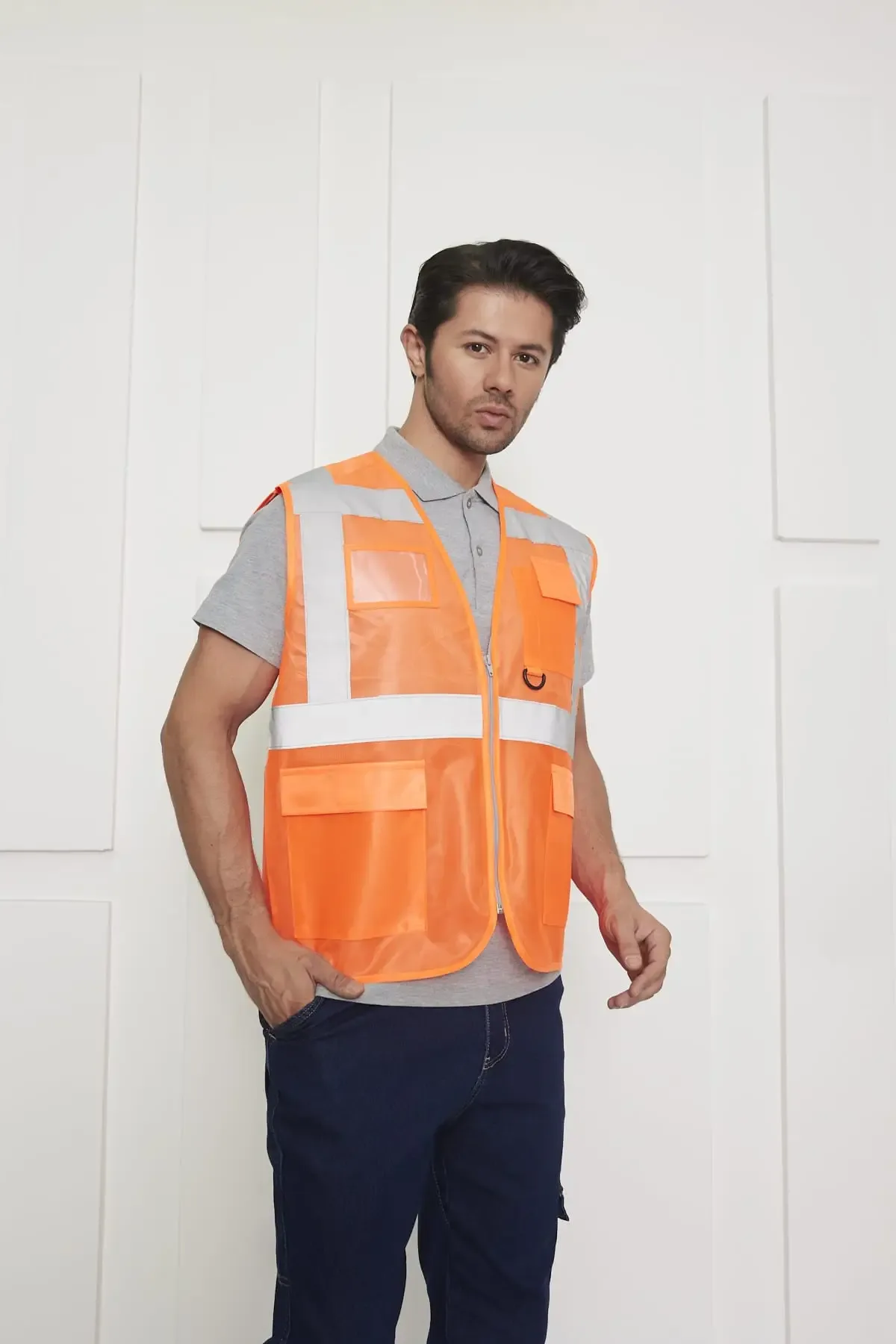
The engineer's vest is a reflective hi-vis vest made for site engineers, managers and technical staff, with heavy woven polyester hi-vis fabric to EN ISO 20471 and a five-pocket layout.
Average unit price · excl. VAT
≈ €4.05/pc
100 pcs
Estimated total €405
Indicative price converted from Turkish lira at the Central Bank of the Republic of Türkiye rate of 21 October 2026, excl. VAT. Request a quote for your exact export price.
Product description
What Is an Engineer's Vest?
An engineer's vest — also known in the sector as an engineer's hi-vis vest, supervisor's vest or site vest — is a high-visibility vest with pockets, designed for technical staff who need not only visibility on site but also somewhere to carry things and keep them organised. It differs from a standard hi-vis vest in two ways: a heavier woven polyester fabric and a pocket layout suited to carrying an ID card, pen, phone, paperwork and a radio.
Site engineers and inspection staff spend the day taking measurements, filling in forms, taking photos and communicating by radio. A thin knitted hi-vis vest with no pockets falls short in this workflow; equipment is either carried in the hand or wedged into the clothing under the vest. The engineer-style vest closes exactly this gap.
At Mars Wear we make the engineer's vest at our own production facility. Pocket layout, colour combination, fastening type and logo placement are decided for your organisation. Our minimum order is 100 pieces; we ship within Türkiye and abroad.
How Does It Differ From a Standard Hi-Vis Vest?
- Fabric: The engineer style uses woven polyester (180–200 g/m²); the standard hi-vis vest uses knitted polyester (120–150 g/m²). The woven construction is heavier and holds its shape.
- Pocket layout: The engineer style has 5 pockets (ID, pen, phone, paperwork, radio); the standard vest has no pocket or a single pocket.
- Durability: In site use with frequent washing, the heavy woven fabric lasts noticeably longer than a knitted vest.
- Look: With its two-tone colours and neat pattern, it gives a corporate, professional appearance and visually sets managers and inspection staff apart from the site team.
- Typical user: The engineer style is for site engineers, managers and inspectors; the standard vest is for visitors and general hi-vis needs.
If you need vests for visitors and general visibility, our Reflective Hi-Vis Safety Vest model is more cost-effective.
Product Features
- EN ISO 20471 Class 2 configuration
- Heavy woven polyester hi-vis fabric — durable for site use
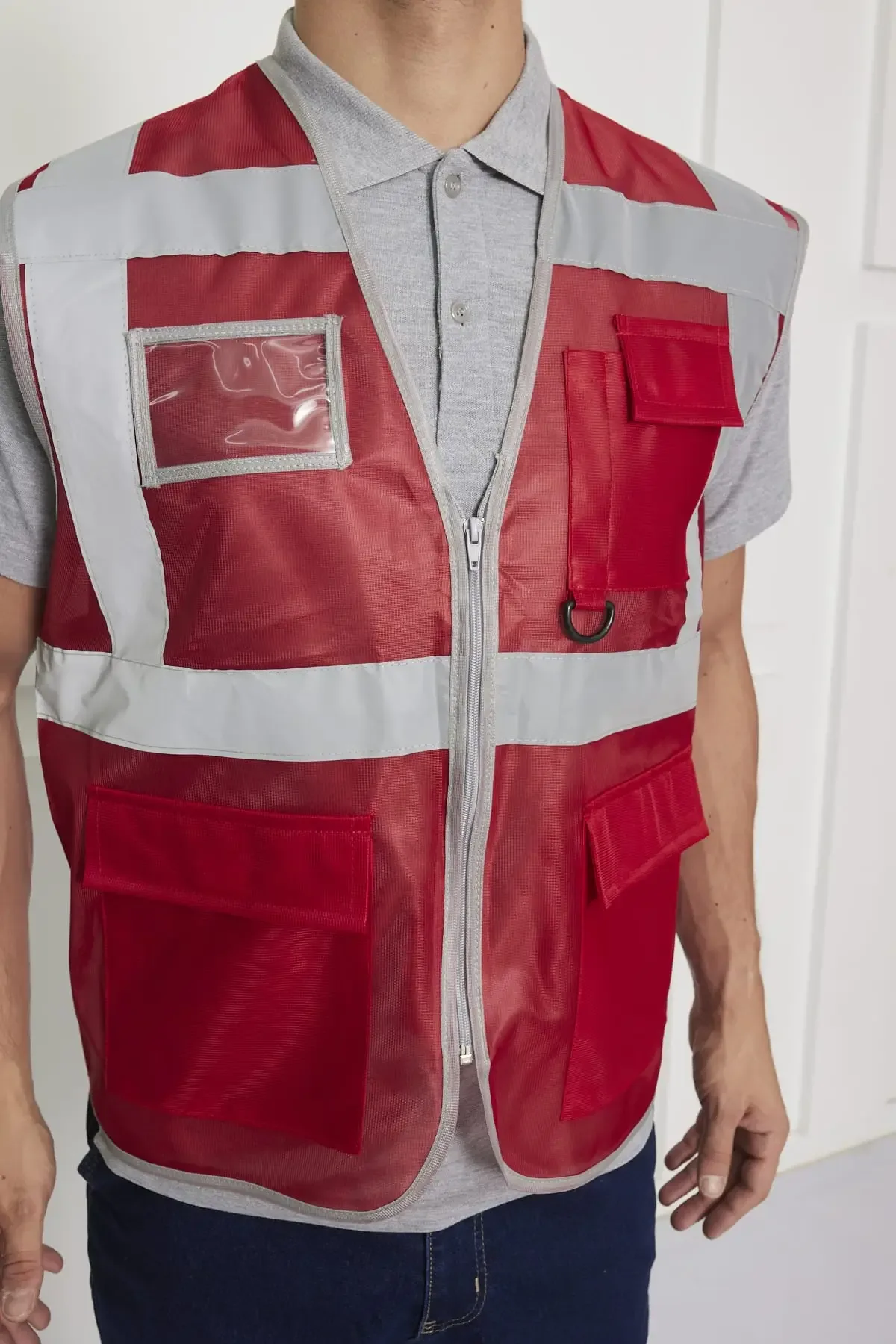
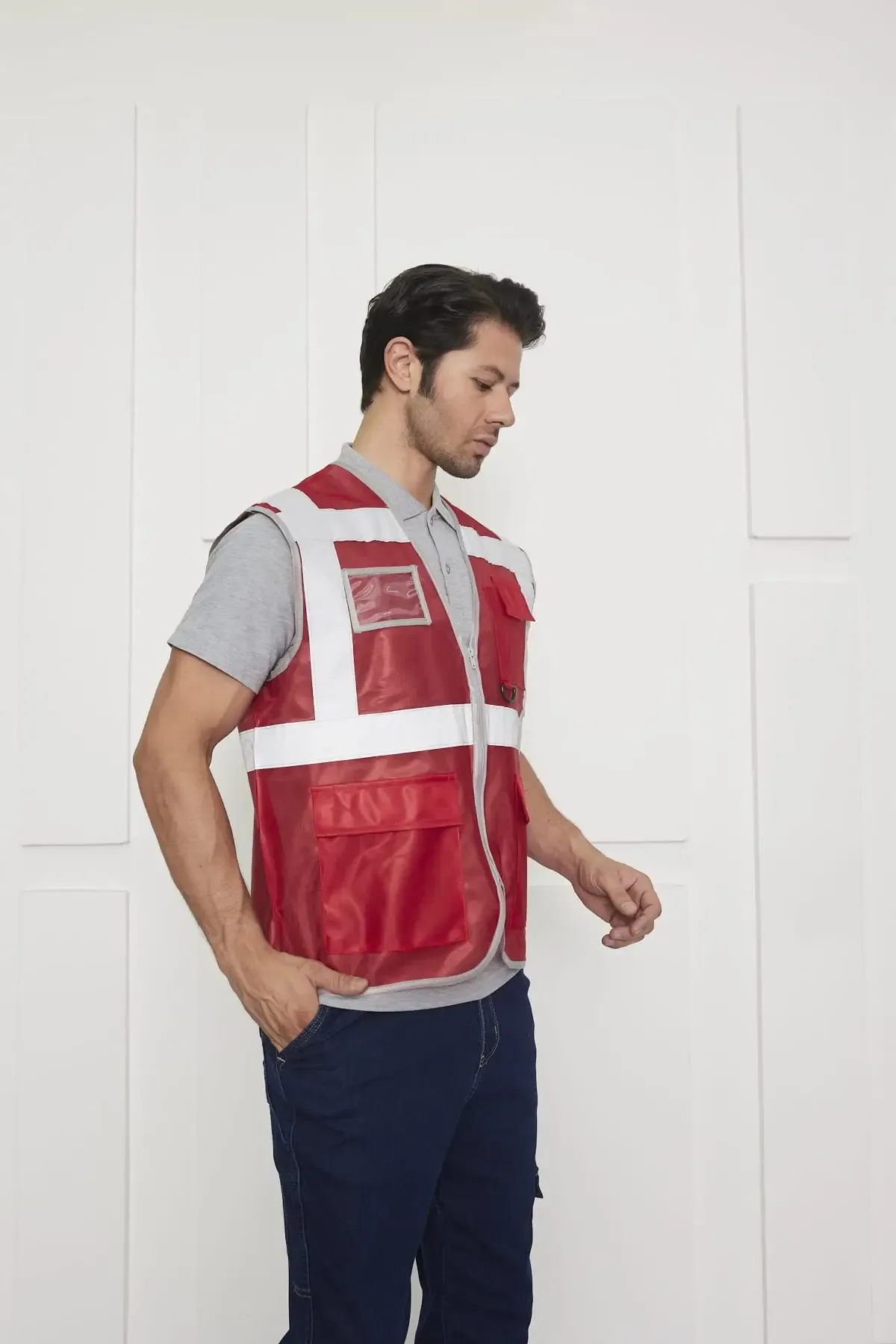
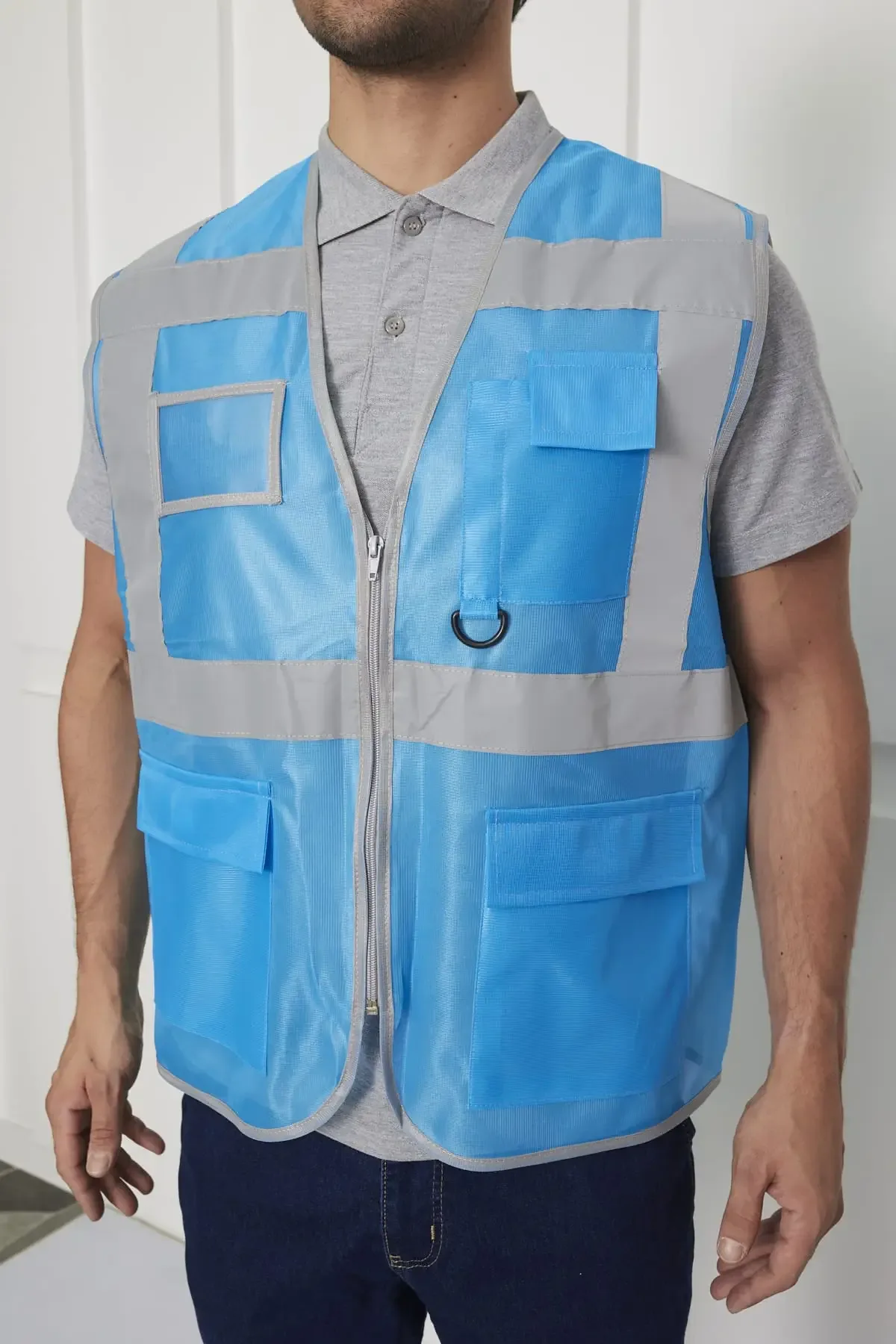
- 5-pocket layout: 2 flapped chest, 1 pen, 1 inner, 1 radio/back pocket
- Flapped chest pocket for an ID or lanyard card
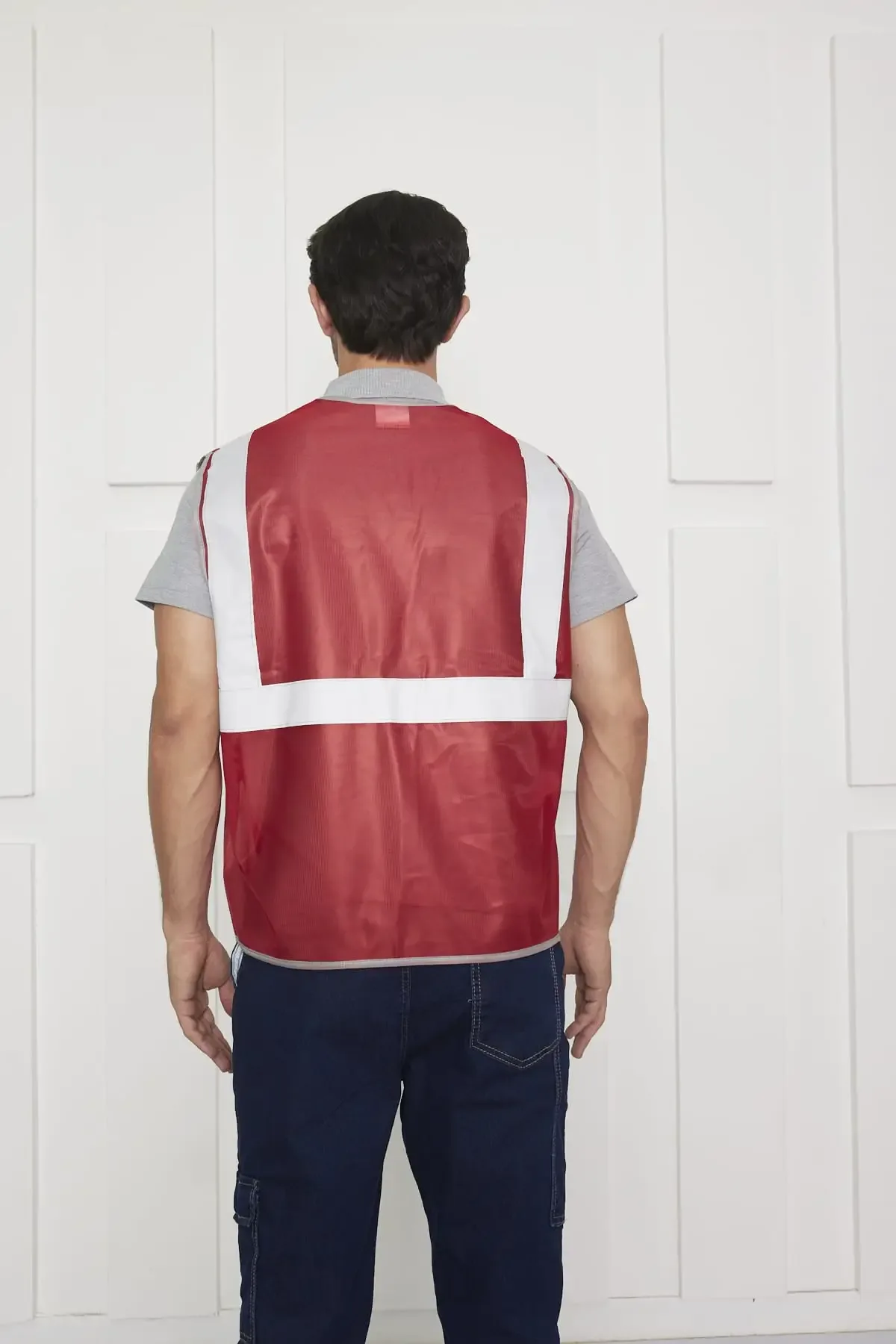
- 360° reflective layout — chest, back, shoulders and armhole edges
- Hook-and-loop or zip fastening, adjustable waist
- Hi-vis yellow/orange in a two-tone combination with navy, grey or khaki
- Size range XS – 5XL; special sizes possible
- Logo embroidery, transfer print, back lettering
- Minimum order 100 pieces · standard lead time 15 working days
Technical Specifications
- Fabric: Woven polyester hi-vis, 180–200 g/m²
- Standard: EN ISO 20471 Class 2 configuration
- Reflective layout: 360° — chest, back, shoulder and armhole-edge tapes
- Colour: Hi-vis yellow or orange; two-tone with navy, grey or khaki
- Pockets: 2 flapped chest + 1 pen + 1 inner + 1 radio/back pocket
- Fastening: Zip or hook-and-loop; chest pockets with Velcro flaps
- Sizes: XS – 5XL (special sizes on request)
- Logo application: Embroidery, transfer print, reflective application
- Logo area: Left chest, back and back of the collar
- Minimum order: 100 pieces
- Production time: 15 working days
- Care: At most 40 °C, inside out; no fabric softener or tumble dryer
- Place of production: Zeytinburnu, Istanbul — our own facility
Pocket Layout and Use on Site
The pocket layout is designed around the real workflow on site:
- Flapped chest pockets: For an ID or lanyard card and a phone. The Velcro flap stops the contents falling out when bending and using ladders.
- Pen pocket: Above the left chest; close to the natural movement of the hand for filling in forms and marking.
- Inner pocket: For folded forms, delivery notes and paperwork — a sheltered area in the rain.
- Radio pocket: For bulky equipment such as a radio, gloves or a spare mask; a hanging loop is added on request.
All the pockets are positioned so as not to block the visibility of the reflective tape; the reflective area required by the standard is kept. If your team carries different equipment, we can redesign the number and placement of pockets with our design team.
What Colour Is an Engineer's Vest?
Three approaches are common on site:
- Hi-vis yellow + navy: The most common combination. The yellow background keeps visibility high, while the navy lower panel shows dirt less. The standard on general construction sites and in building inspection.
- Hi-vis orange + navy: Preferred on gas, energy and infrastructure sites; orange is an established site colour in these areas.
- Grey or khaki two-tone: Made for technical and management staff looking for a calmer, more corporate look.
The choice of colour is not just about looks: the standard sets a minimum area requirement for the fluorescent background. When applying your corporate colour, our own design team decides which panels will not disturb this area and presents them for your approval before production.
Summer and Winter Use
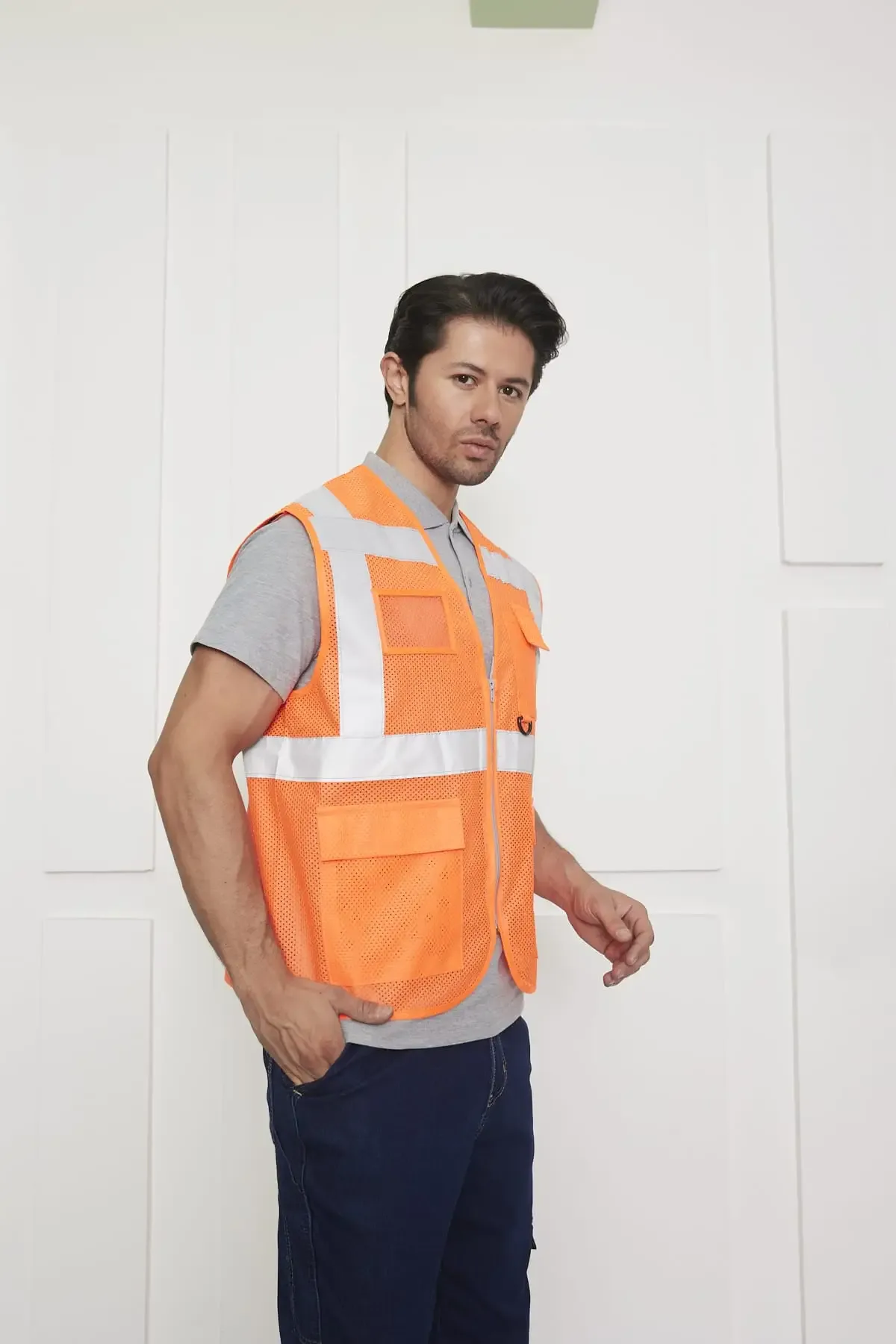
- Mesh (summer) configuration: For breathability in the hot months and in hot indoor areas, you can ask for mesh fabric in the side panels.
- Winter use: The vest is cut slightly generously so that a fleece or winter work jacket can be worn underneath. For cold sites, our fleece-lined or padded gilet models may be more suitable.
Printed Engineer's Vest: Logo, Embroidery and Back Lettering
The engineer's vest is the most visible corporate surface on site. Application options:
- Company logo on the left chest — embroidery or transfer print
- Company name, department or job lettering such as "ENGINEER", "SUPERVISOR", "INSPECTOR" across a wide area on the back
- Size or department code on the back of the collar
- Different colour and lettering combinations to distinguish subcontractors and shifts
The method is chosen according to how heavily it will be used: embroidery is long-lasting and corporate, while transfer print is better for large, multi-colour logos. For details, see our logo printing and embroidery methods guide.
Areas of Use
- Road and infrastructure work: Maintenance inspection, asphalt and ground quality control. Sections open to vehicle traffic require Class 3; a sleeveless vest cannot reach this class and should be planned together with a sleeved top.
- Energy and gas sites: Line checking and inspection staff; hi-vis orange is usually preferred.
- Construction sites and building inspection: Site inspectors, health and safety specialists and inspection staff.
- Logistics and warehousing: Dispatch supervisors and warehouse managers — visibility amid forklift traffic combined with carrying paperwork. See the full set on the logistics and warehouse workwear page.
- Factories and production: Quality control and maintenance teams. Our factory and production workwear category may be relevant.
- Municipal and parks teams: Field inspection and supervision teams.
- Events and organisation: Operations managers and field coordination teams.
Sizes and Fit
The vest is cut slightly wider than standard so that a winter work jacket or fleece can be worn underneath. It is produced in XS–5XL; if your team needs larger sizes, we make special sizes. Simply share the size breakdown on the order form — for detailed measurements, see our workwear size chart guide.
Quantity, Pricing and Lead Time
We do not sell the engineer's vest from stock; we produce every order for your organisation.
- You send us your requirements: quantity, colour combination, pocket layout, size breakdown and logo details.
- Our design team prepares the logo placement and colour application and presents them for your approval.
- If you wish, we make a sample before production.
- After approval, production starts at our own facility — 15 working days.
- Shipping is within Türkiye and abroad.
- Minimum order: 100 pieces
- Price: The unit price falls in tiers as the quantity rises — an advantage of about 12% at 500 pieces, 18% at 1,000 and up to 25% at 2,500 pieces and above. You can see the average unit price for your quantity in the calculator on this page.
- Net price: Set by the colour combination, pocket layout, logo method and size breakdown, and sent with your quote. Get a quick quote.
Care
Wash at no more than 40 °C, inside out. Fabric softener and tumble dryers should not be used — both gradually reduce the reflective tape's performance. When ironing, the iron should not come into direct contact with the reflective tape. For details, see our workwear care guide page.
Frequently Asked Questions
What is the difference between an engineer's vest and a standard hi-vis vest?
The engineer's vest is made from heavy woven polyester and has a 5-pocket layout; the standard hi-vis vest is made from thin knitted fabric and usually has no pockets. The engineer style suits site engineers, managers and inspection staff; the standard style suits visitors and general visibility.
What colour is an engineer's vest?
The most common combination is hi-vis yellow + navy. Hi-vis orange is preferred on gas, energy and infrastructure sites. Grey and khaki combinations are also made for management staff looking for a corporate look. Whatever the colour, the fluorescent area required by the standard is kept.
How many pockets are there, and can the layout be changed?
The standard configuration has 5 pockets: 2 flapped chest, 1 pen, 1 inner and 1 radio/back pocket. We can redesign the number and placement of pockets around the equipment your team carries.
Is the ID card pocket standard?
Yes. The flapped Velcro pocket on the left chest is standard, for a lanyard card and ID.
Do you make a mesh (summer) version?
Yes. For hot environments, mesh fabric can be used in the side panels; it is configured so that the fluorescent area and reflective layout are kept.
Can this vest be Class 3?
No. Class 3 also requires reflective tape on the sleeves and shoulders; no sleeveless vest can reach this class. For roadworks open to high-speed traffic, a sleeved top and trousers need to be considered together — let us decide the right class together.
What is the minimum order?
100 pieces. As the quantity rises, the unit price falls in tiers.
Do you produce and ship abroad?
Yes. We ship from our own production facility within Türkiye and abroad.