















Season Changeover Plan: A Summer–Winter Workwear Transition and Stock Strategy
The season changeover is the most critical, yet most neglected, process in managing corporate staff clothing. An operations team sweating in +28 °C on site at the end of March while the winter jackets are still in the cupboard; a skilled worker going out on site in October in a summer T-shirt and getting cold; a procurement officer panicking in November because "we have no winter stock in size 38 at all" — these three scenes are the shared story of every company that does not treat season changeover planning as a supply chain discipline. At Mars Wear, the support our corporate customers working with a 100+ piece minimum ask for most often under an annual framework agreement is the question "how do we set up the seasonal stock cycle?".
This guide offers a model for the seasonal changeover calendar across Türkiye's 7 climate regions, the timing of purchase orders, warehouse rotation and checks on sizes and colour codes, working in step with the Mars Wear production calendar. The aim: a staff clothing operation in which the words "we don't have it" are never heard at the start of a season.
What Is a Season Changeover Plan, and Why Is It a Supply Chain Discipline?
A season changeover plan is an operational discipline in which a company decides in advance on what date, to which location, in what quantity and in which sizes it will deliver its summer and winter staff clothing, and in which the procurement–warehouse–field chain works in sync. An approach of simply "we'll call the supplier when spring comes" causes friction even in a company with 30+ staff, and turns into a crisis in multi-location structures with 500+ staff.
Under an annual framework agreement, a season changeover plan has three layers: (1) the forecasting layer — how many staff there will be at which location next season, which roles will see new hires, which sizes will need replacing; (2) the supply layer — the order closing dates for summer and winter products, whose lead time varies between 4 and 8 weeks; (3) the distribution layer — on what date and in what quantity products will be moved between the central warehouse and branch warehouses.
A Seasonal Calendar for Türkiye's 7 Climate Regions
The most common mistake in multi-location companies is treating the season changeover as a single nationwide date. While the first snow falls in Erzurum in mid-October, temperatures of +24 °C can last into November in Antalya. Under the framework agreement, the Mars Wear production team works with corporate customers to a separate delivery calendar for each region.
This approach removes the "one date for everyone" mistake for multi-branch supermarkets, logistics firms, production groups and retail chains. Delivering winter jackets to 30 locations in Marmara in mid-October while waiting until the end of November for 5 locations in Antalya is the foundation of managing both comfort on site and stock rotation correctly. For a detailed multi-location strategy, see our Multi-Location Staff Clothing Management guide.
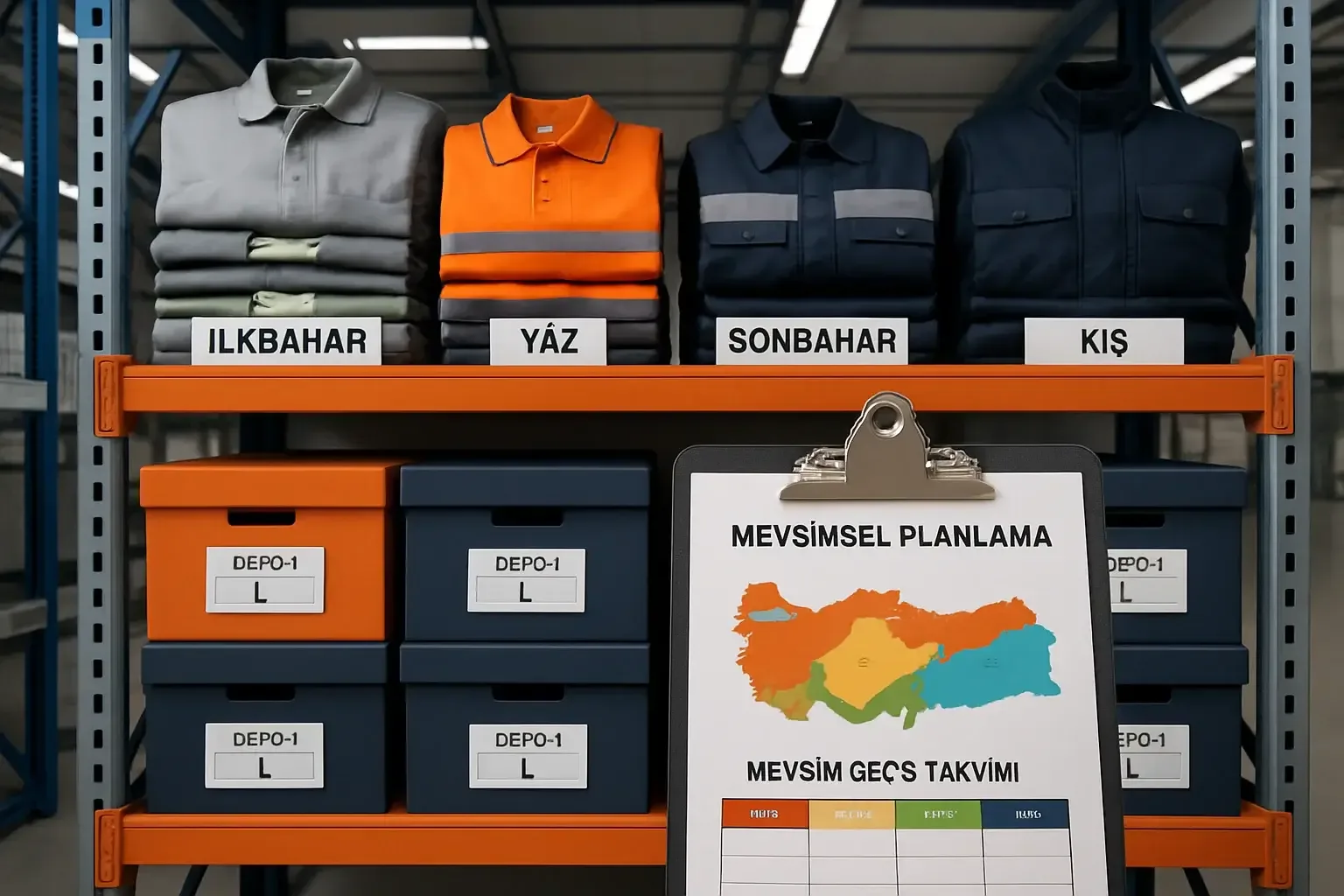
The Summer Workwear Transition: A March–May Strategy
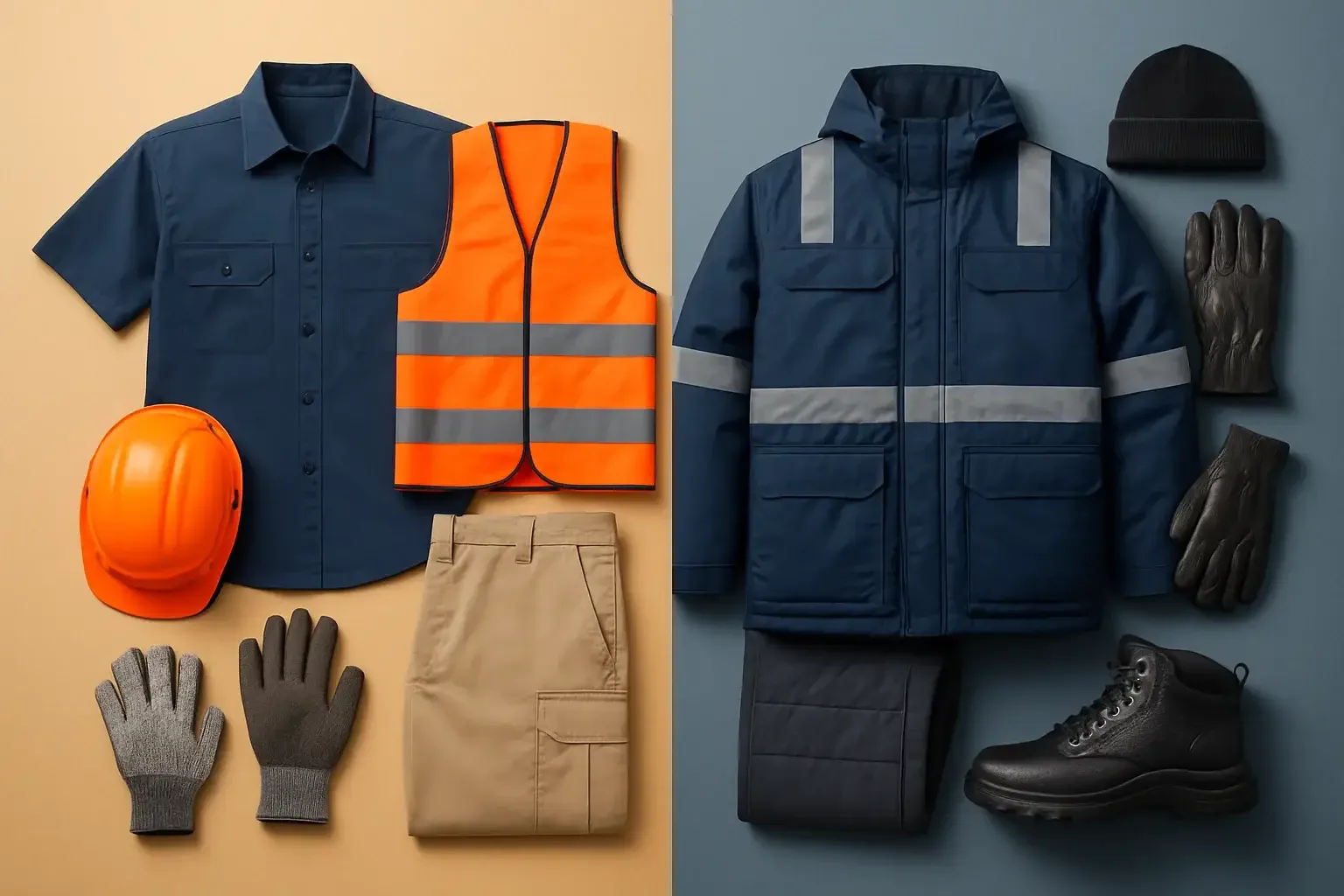
The key parameters of the summer transition are the fabric's weight and breathability. While standard winter trousers are 280–320 g/m² gabardine or twill, summer models use 180–220 g/m² ripstop, poplin or light gabardine. The standout choices in Mars Wear's summer season collection are:
- Summer work shirt: Short-sleeved, 65% polyester / 35% cotton poplin (170–190 g/m²), with moisture-wicking layers.
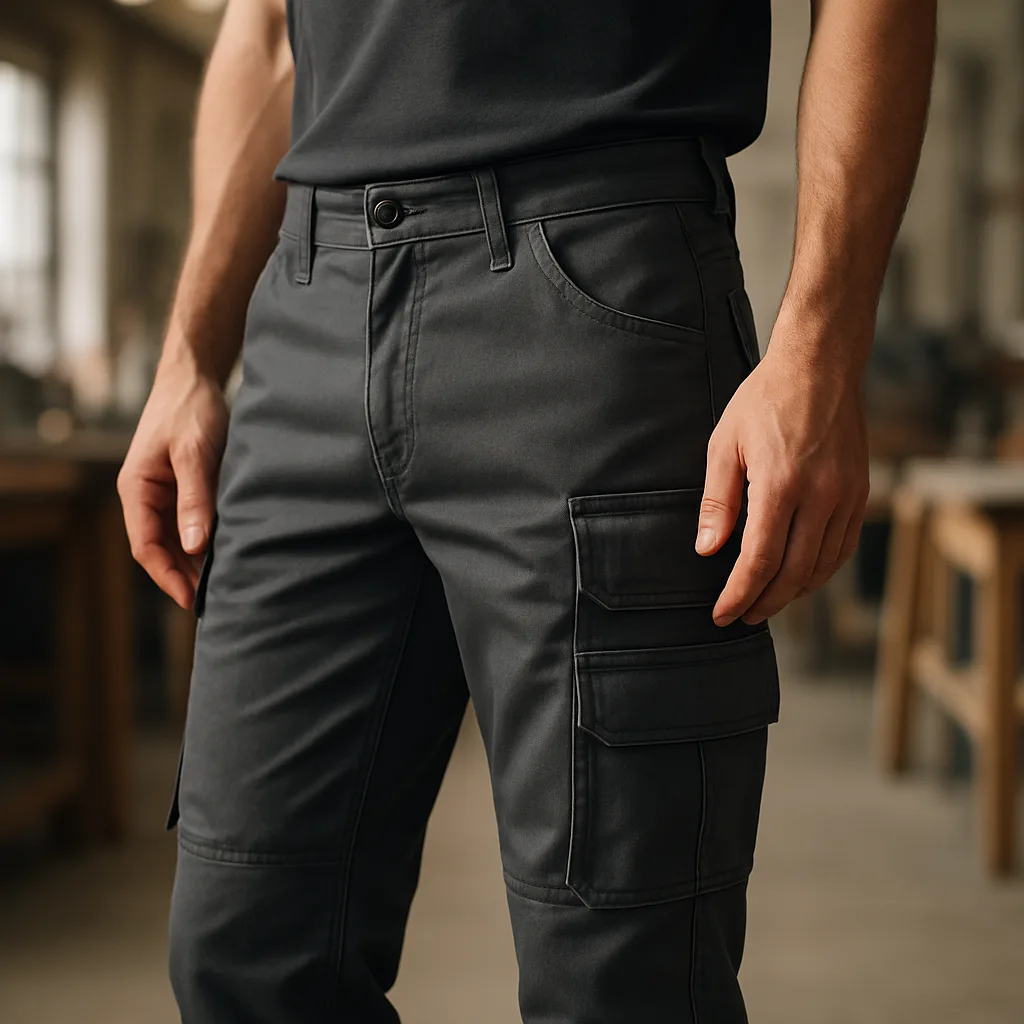
- Summer work trousers: 200 g/m² ripstop or light gabardine, cargo pocket option, reinforced knees.
- Summer hi-vis vest: 120 g/m² mesh fabric, EN ISO 20471 Class 2 reflective tape, a design that disperses body heat.
- T-shirt + polo set: Coloured logo T-shirts in 180 g/m² 100% cotton jersey; a polyester blend is more durable for field roles.
The order closing date for the summer transition in the Marmara region is 15 February at the latest. Given that the production line takes about 6–8 weeks and customs/cargo plus internal distribution take 1–2 weeks, this date is critical for hitting a target of delivery to site on 1 April. For customers with an annual framework agreement, stocking of fabric and accessories starts as soon as the agreement is signed — so last-minute size requests are met in 7–10 days on average.
Summer Colour and Fabric Choices
In summer, light grey, sand beige, stone grey and light navy should be chosen rather than dark navy and black. Light colours reflect sunlight, lowering the fabric's surface temperature by 4–7 °C on average. This reduces the risk of heat stress, especially for staff working on open sites. For more information, see the Workwear Fabric Guide.
The Winter Workwear Transition: A September–November Strategy
The backbone of the winter transition is a layering system. Instead of a single thick jacket, a combination of a base layer (thermal base layer), a mid layer (fleece, softshell, gilet) and an outer layer (waterproof jacket) lets staff adapt to temperature changes during the day. On sites in the north and east that see -15 °C, a layering system is essential.
- Thermal base layer: Polypropylene or a merino blend; keeps body heat in and moves sweat away.
- Fleece / softshell (mid layer): 300 g/m² anti-pilling fleece or a windproof softshell; ideal for roles that move between office and site.
- Winter work jacket (outer layer): 240–280 g/m² waterproof membrane, 80–120 g synthetic fill, taffeta lining. EN 343 certification is recommended.
- Winter work trousers: Lined, windproof, 320–360 g/m² gabardine; a fleece-lined option for very cold regions.
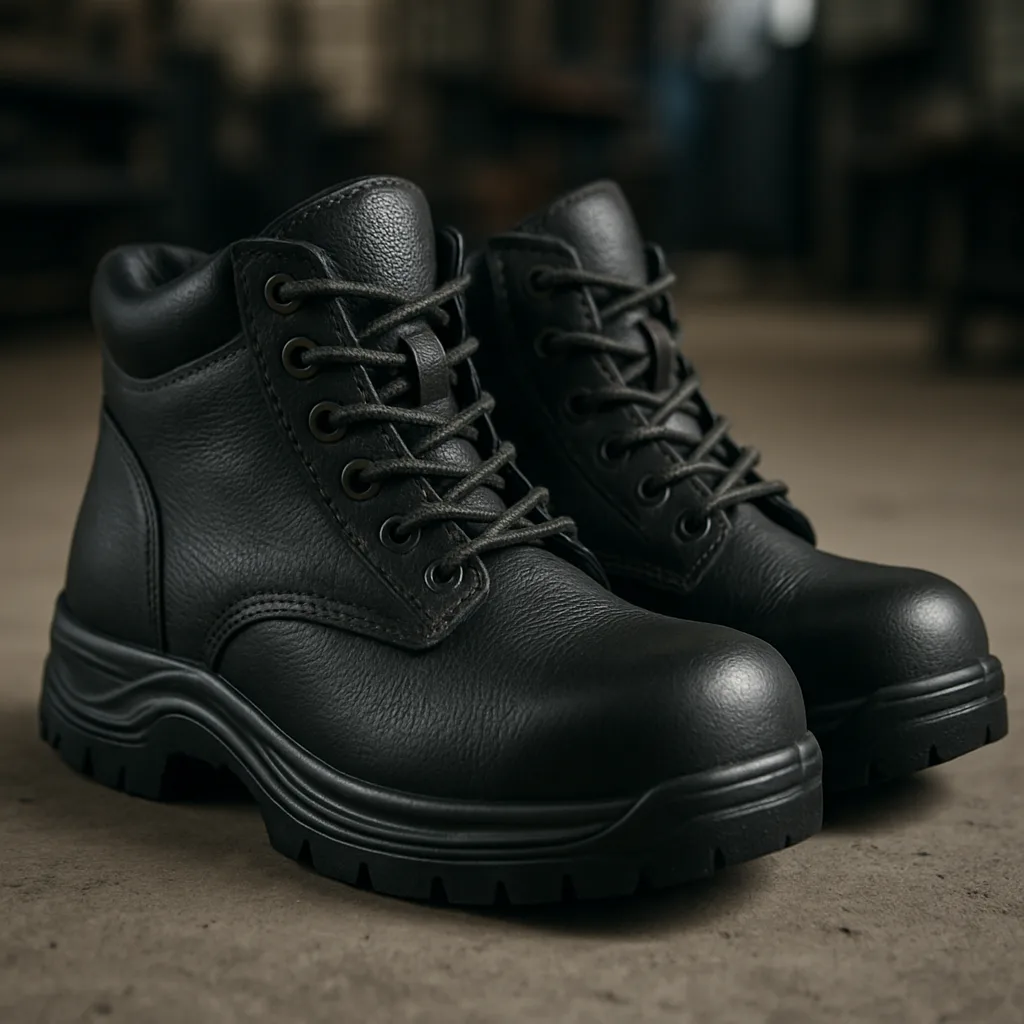
- S3 safety shoes: Waterproof, thermally lined, composite/steel toe cap. The EN ISO 20345 S3 standard is essential for ground conditions in winter.
The winter order closing date for Marmara is 1 August at the latest. This date means reserving capacity before the period when production of padded jackets starts to peak. Companies that are late face a "no stock" message in mid-September for the popular sizes (the 40–48 men's size band).
The Mid-Season: The Most Forgotten Transition
Late March–early April and October are months in Türkiye when the temperature can swing by 15–20 °C during the day. A day that starts at 8 °C in the morning and climbs to 22 °C in the afternoon is a comfort problem that cannot be managed with single-layer clothing. Mid-season clothing is the "missing link" of the season changeover plan.
Recommended combinations for the mid-season:
- Softshell jacket + long-sleeved polo: Windproof but breathable, ideal between +5 and +18 °C.
- Fleece gilet + long-sleeved shirt: An approach that keeps the existing shirt and warms only the torso.
- Lightly padded gilet: 100 g synthetic fill, easy to take off and put on, ideal for logistics and warehouse teams.
- Jacket with a detachable lining: Two seasons of use from one product during the autumn and spring transitions.
Under an annual framework agreement, mid-season products should be stocked at 15–20% of the summer and winter order quantities. For detailed product recommendations across every season, see the Seasonal Workwear category.
Stock Management: The Annual Framework Agreement Model
The operational side of the season changeover plan is stock management. The golden rule of stock management: "no size should run out as the season ends". At the end of the season, an average of 5–10% of the most requested sizes, such as 38, 40 and 42, should be kept in reserve. New hires, mid-season size exchange requests and product damage are covered from this reserve. In Mars Wear framework agreements, this reserve is defined and priced as "guarantee stock".
FIFO Rotation and Managing Ageing Stock
A significant proportion of workwear has a warehouse shelf life of less than 24 months. Reflective products in particular can lose their brightness if stored in damp conditions for a long time, because of the plasticiser (PVC) in the reflective material. The FIFO (first in, first out) rule: old-season stock is sent out before new-season stock. This both protects reflective performance and keeps the cost of ageing stock close to zero.
The Season Changeover Budget
For a company with 200 staff and 5 locations, the annual season changeover budget is planned on the basis of the positions, the size breakdown and the number of locations. Customers with an annual framework agreement use a model with payment at the start of the season and additional size-based shipments in mid-season. Thanks to bulk purchasing, the cost per piece is 18–25% lower than with individual orders.
Season Changeover Priorities by Sector
Logistics and Parcel Services
For couriers carrying parcels outdoors, the winter transition requires the trio of a waterproof jacket + thermally lined trousers + S3 shoes. In the summer transition, a breathable short-sleeved top + an EN ISO 20471 hi-vis vest stands out. For details, see the Waterproof Reflective Work Jacket.
Construction
In construction work, the season changeover is planned together with PPE renewal. PPE components such as hard hat inner bands, the soles of S1P/S3 shoes and gloves should be tied to the season changeover calendar.
Security
Under Turkish Law No. 5188, security staff are issued summer and winter uniforms as separate sets. The summer uniform consists of a short-sleeved shirt + light trousers; the winter uniform of a long-sleeved shirt + winter trousers + a cold-weather jacket.
Production and Factories
In air-conditioned factories, the season changeover has minimal impact; standard coveralls and aprons are used all year round. In production areas without air conditioning, short-sleeved coveralls are preferred in summer and lined coveralls in winter. Cold store (food) staff are issued a thermal layered set all year round.
Retail and Stores
In retail, the season changeover is planned in line with the brand identity. The summer collection arrives in stores in early May, the winter collection at the end of September. For retail chains, Mars Wear provides a delivery calendar synchronised with store opening dates.
Order Timing: A Four-Season Calendar
Under an annual framework agreement, the order calendar is optimised as follows:
- December–January: Summer order projection for the following year, size and colour approval, production line reservation.
- February: Summer production starts, first-batch distribution planning.
- End of March: Summer product deliveries begin (Mediterranean, South-Eastern Anatolia).
- April–May: Deliveries to Marmara, the Aegean, Central Anatolia, the Black Sea and Eastern Anatolia in turn.
- June–July: Winter order projection, size approval, production line reservation.
- August: Winter production starts, fabric purchasing.
- September: Winter deliveries to Eastern Anatolia, the Black Sea and Central Anatolia.
- October–November: Winter deliveries to Marmara, the Aegean and the Mediterranean.
This cycle makes optimum use of production line capacity; it eliminates the 15–25% price difference created by out-of-season supplier orders.
The 7 Most Common Mistakes in the Season Changeover
- A single-date policy: Planning delivery to the whole of Türkiye on the same day — handing out winter clothing in Antalya at the end of March spoils comfort, and sending summer clothing to Erzurum in mid-May leaves staff cold.
- Freezing the size band: Measurements taken at the start of the season produce a list that is not updated for staff who leave or join mid-season. Measurements should be updated periodically using the Size Chart Guide.
- Ignoring the mid-season: Going straight to jackets without stocking softshells, fleece gilets or light jackets stops the team adapting to temperature changes during the day.
- Being caught unprepared for mid-season size requests: Not keeping guarantee stock lowers satisfaction on site with the answer "we don't have it".
- Not giving care instructions: Storing summer products correctly (washed, dry, boxed) when moving from summer to winter is critical for reusing them the following year. See the Workwear Care Guide.
- Not spreading the budget across periods: Distributing everything in one go without allocating 60% of the annual staff clothing budget to winter and 40% to summer squeezes cash flow.
- Skipping certificate and PPE checks: At the season changeover, the EN ISO 20471 brightness of reflective products, the wear on safety shoe soles and the EN 397 visual check of hard hats must not be neglected.
Steps for Preparing a Season Changeover Plan
The 8-step season changeover preparation we recommend to customers with a Mars Wear framework agreement:
- Pull out the shipment and return records from the previous season (sector, location, department, size).
- Project the number of staff at each location for the next season (new hires, leavers, transfers).
- Update the position × clothing set matrix (production, logistics, office, field, security etc.).
- Clarify the size, colour and logo print/embroidery details using the Mars Wear framework agreement template. See the Logo Printing Guide.
- Share delivery dates with branches according to the regional seasonal calendar.
- Set the guarantee stock quantities for the central warehouse and branch warehouses.
- Put the mid-season size exchange and urgent replenishment procedure in writing.
- Standardise the end-of-season return, washing and storage procedure.
When this whole process is handled together with our detailed purchasing guide, the Staff Clothing Selection Guide, distribution shortfalls at the start of the season fall below 3% on average among our corporate customers.
End-of-Season Storage and Care
When summer products go into storage in November–December and winter products in April–May, the following rules should be observed:
- All products must be washed and completely dry (to prevent mould).
- They should be stored in boxes with polyethylene lids, labelled with size and position.
- When folding reflective products, the reflective tape should face inwards (to limit UV erosion).
- Jackets and coats should be stored on hangers, not compressed.
- Safety shoes should be stored in their boxes with a shoe tree, in a cool, dry place.
- The stock inventory should be kept in Excel or an ERP, with a year-end stock count.
How Does the Mars Wear Season Changeover Process Work?
At its production centre in Zeytinburnu, Istanbul, Mars Wear offers the season changeover plan under a framework agreement to corporate customers working with a 100+ piece minimum. The process consists of these steps:
- An annual needs projection and a position × size × location matrix are prepared.
- Summer and winter fabric purchasing starts when the framework agreement is signed.
- The production calendar is planned according to the regional seasonal calendar.
- Distribution to the central warehouse and branch warehouses is coordinated from a single point.
- Mid-season size exchange requests are met within 7–10 working days.
- A year-end performance report (delivery times, return rates, size breakdown) is produced.
The Mars Wear range is made from OEKO-TEX Standard 100 certified fabrics; products that qualify as PPE comply with the relevant standards such as EN ISO 20471, EN ISO 20345, EN 343 and EN 397. For details, see the OEKO-TEX Standard 100 Guide and our Sector Solutions category.
Frequently Asked Questions
Do small companies need a season changeover plan too?
A season changeover plan is recommended even for companies with fewer than 30 staff, but the process can be simpler. Because Mars Wear's minimum order is 100 pieces per product, small companies usually buy once a year, sourcing summer and winter sets together.
Should summer and winter clothing be the same colour?
The core colour is kept for brand identity, but the fabric weight and texture change with the season. In summer, choosing a lighter shade (mid navy instead of navy, light grey instead of grey) is recommended for comfort.
Is mid-season clothing essential?
It is not essential; however, in most regions of Türkiye the temperature swings by 15–20 °C during the day at the end of March and in October. In these periods, mid-season products such as softshells or gilets are critical for comfort on site.
When should orders be placed?
We recommend sending your order to Mars Wear by mid-February at the latest for summer, and by early August at the latest for winter. Because production + distribution take 6–10 weeks, this calendar guarantees delivery at the start of the season.
What happens when new staff join mid-season?
Sizes are chosen from the 10–15% guarantee stock held under the framework agreement and delivered within 7–10 working days. For very special sizes, additional production can take 3–4 weeks.
Can end-of-season products be reused?
Yes. With the right care, the economic life of summer and winter products is 2–3 seasons. Products returned by staff are washed and checked, and undamaged ones go into the next season's stock. For details, see the Care Guide.
How is delivery planned for a multi-branch company?
For multi-location companies, Mars Wear packs according to the location × size × colour breakdown. It delivers to each branch in labelled boxes. For details, see the Multi-Location Management guide.
Is UV protection essential in summer workwear?
For staff working long hours on open sites, fabrics with a UV protection layer (UPF 30+) are recommended. In construction, agriculture and logistics in particular, a long-sleeved UV-protective T-shirt is more suitable than a short-sleeved one in summer.
Which certificate should you look for in a winter jacket?
For rainy and snowy regions, EN 343 (protection against rain and liquid splashes) certification should be preferred; for cold stores and outdoor sites, the EN 342 standard (protective clothing against cold). If reflective tape is needed, EN ISO 20471 Class 2 or 3 is looked for as well.
What are the terms of a Mars Wear framework agreement?
For an annual framework agreement, a starting order size of a minimum of 100 pieces per product, the number of staff with an annual projection and a payment plan are agreed. Logo print/embroidery, the size breakdown and the delivery calendar are added to the contract. For details, you can contact the Mars Wear sales team.
At Mars Wear, we work with a 100+ piece minimum for workwear, staff clothing and PPE products, production in Zeytinburnu, Istanbul, EN/OEKO-TEX certified fabrics and an annual framework agreement model. Contact us to manage your whole process, including the season changeover plan, from a single source.
Keep reading
 Workwear Guides
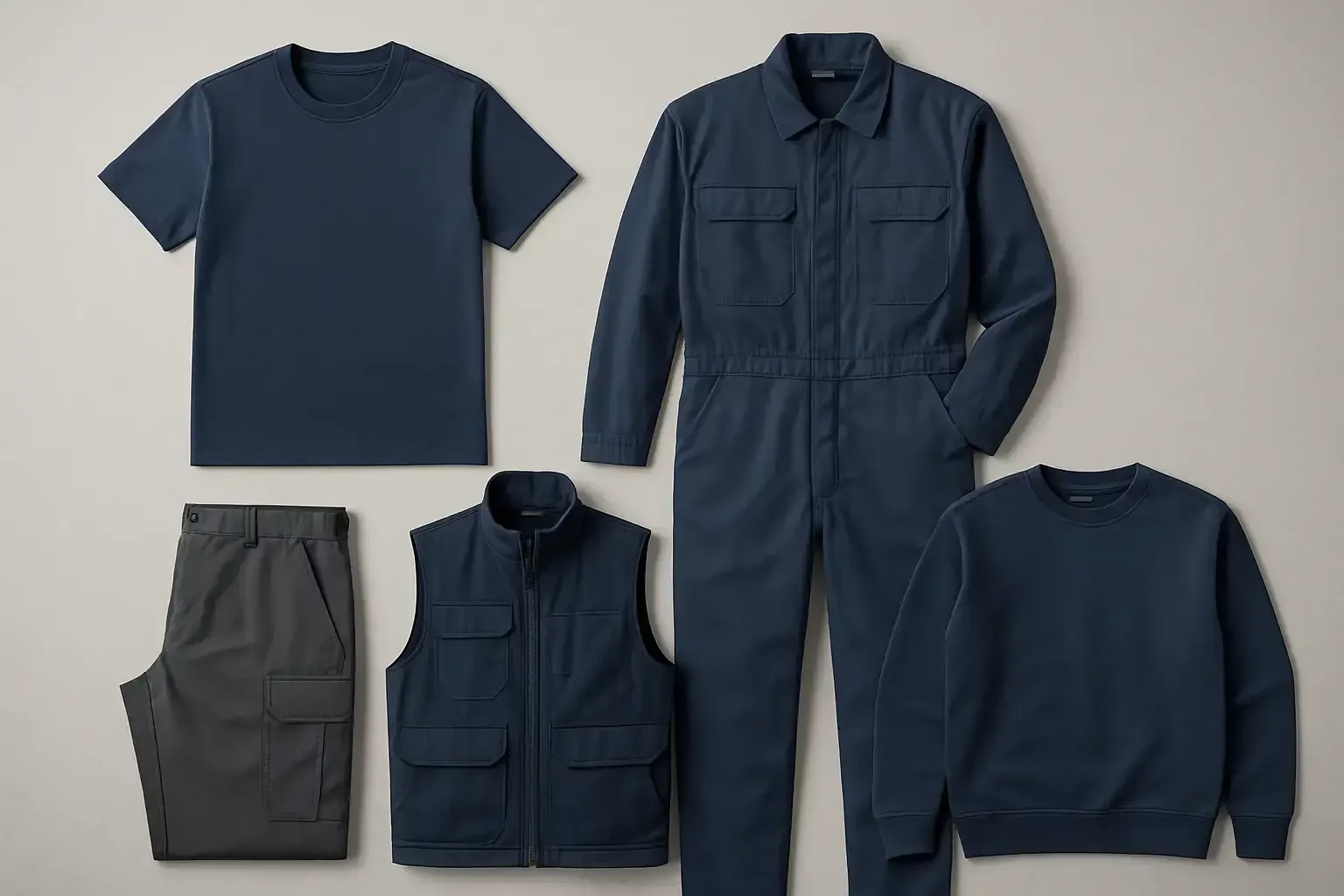
Workwear Models (Category Guide)
Workwear models: T-shirts, trousers, coveralls, gilets and sweatshirts. A guide to choosing by use, fabric and weight. Get a quote for logo production.
 Workwear Guides
Bulk Logo Workwear Production (Min. 100)
Bulk logo workwear and work clothing manufacturing from 100 pieces. Sampling, fabric, production and a 15-working-day delivery process. Get a quote.
 Workwear Guides
Workwear Prices and Cost Guide
Workwear prices vary with fabric, weight, printing and quantity. Learn the logic of tiered costs and get a net price quote for your project.