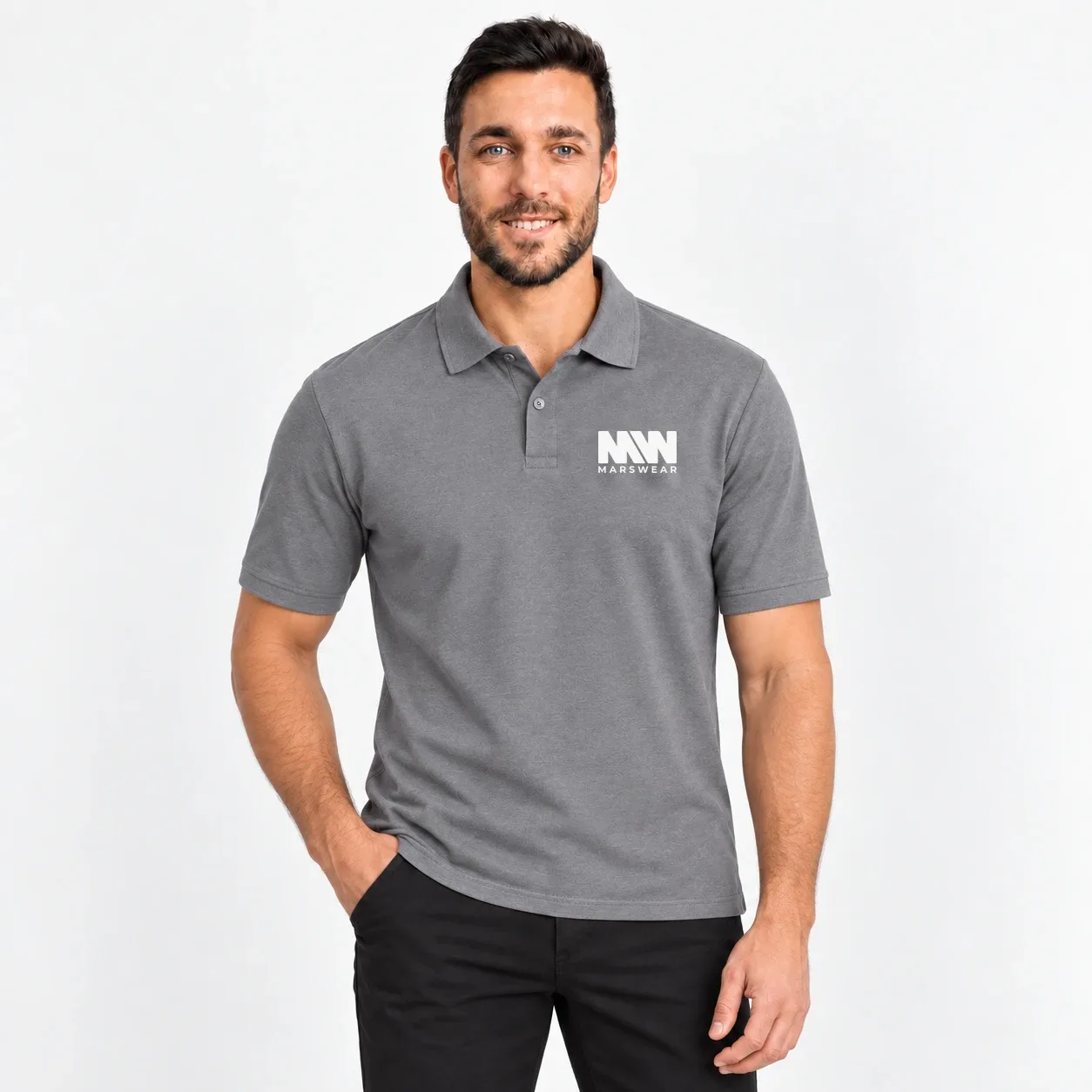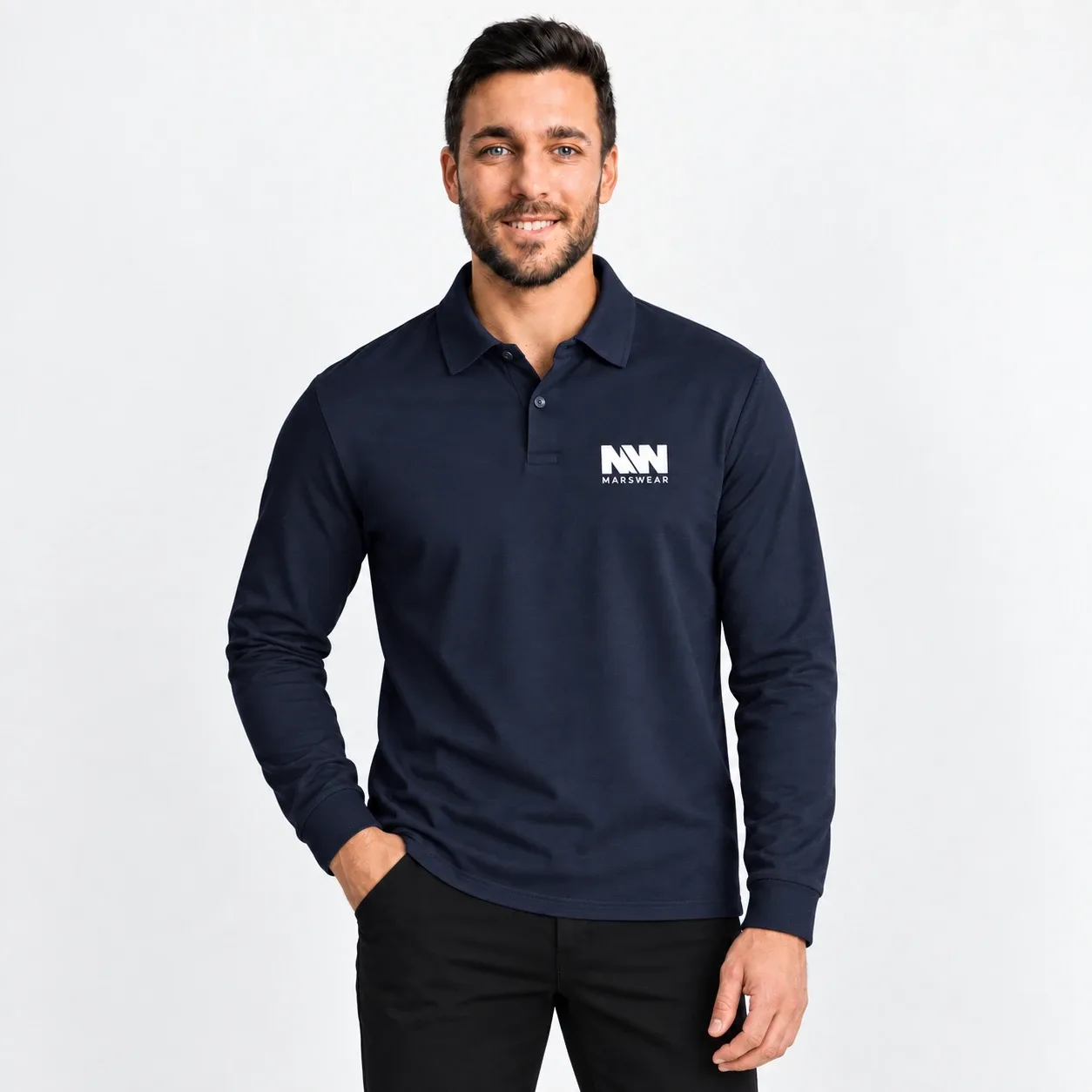


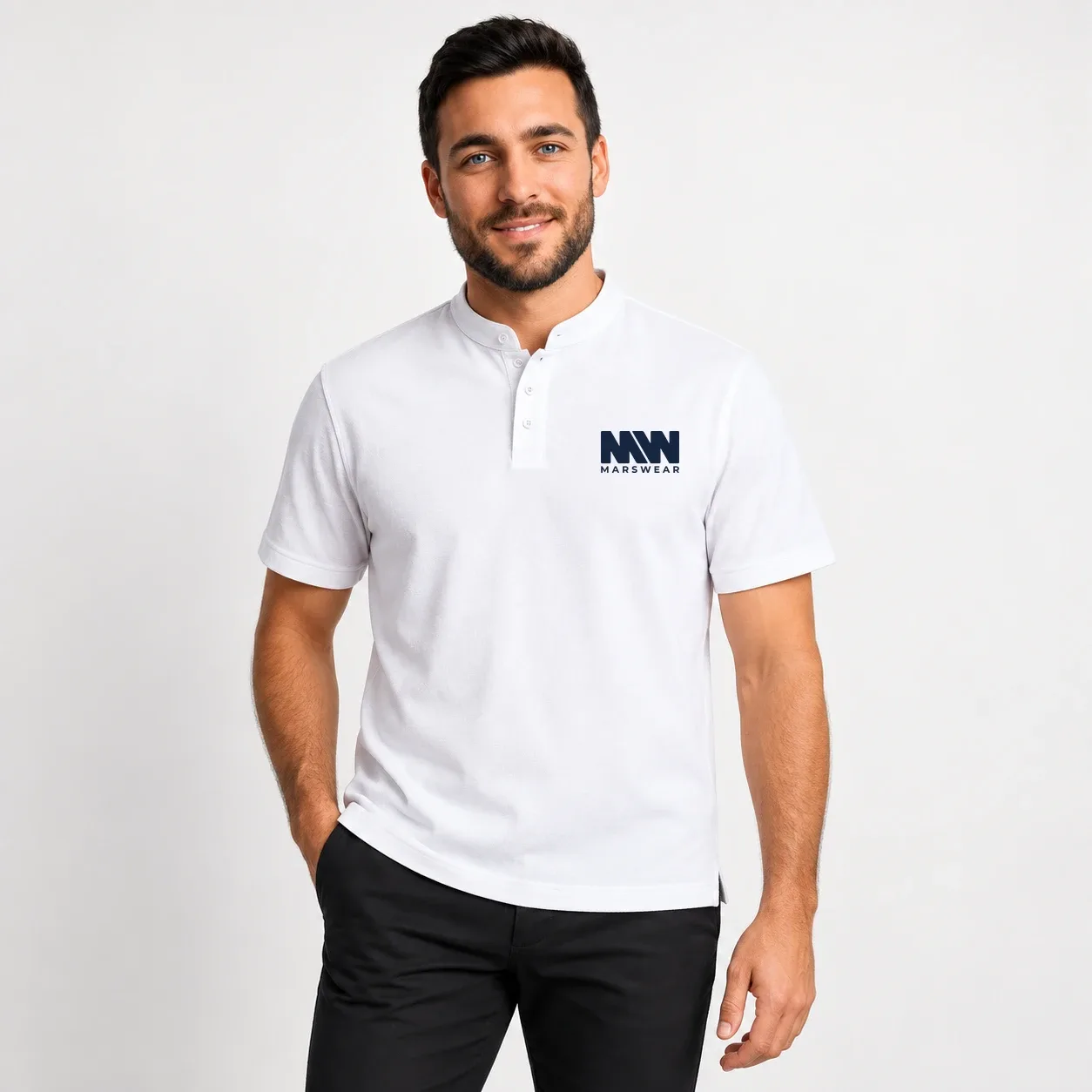
 Work T-Shirts
Crew-Neck Work T-Shirt
SKU · MW-BYT-001
Crew-neck work T-shirt — 100% cotton single jersey, round neck with a rib-knit band, short sleeves. The widest back print area in the catalogue; with logo, min. 100 pcs, our own production.
Average unit price · excl. VAT
≈ €4.77/pc
100 pcs
Estimated total €477
Indicative price converted from Turkish lira at the Central Bank of the Republic of Türkiye rate of 21 October 2026, excl. VAT. Request a quote for your exact export price.
Product description
Product Features
- 100% cotton single jersey fabric — a soft surface, high breathability
- Crew (round) neck — a rib-knit neckband; the neck keeps its shape and does not stretch out
- Nothing to catch — no buttons or placket; the safest cut around machinery
- A wide back area — the largest uninterrupted print surface in the catalogue
- Short sleeves, regular cut — does not restrict shoulder or arm movement
- Weight options — 160 / 180 / 200 / 220 g/m²
- Fabric alternatives — single jersey, piqué, cotton-polyester blend, dry-fit
- Sizes: XS – 5XL (larger sizes on a custom pattern)
- Logo: left chest, back, sleeve
- Minimum order: 100 pieces · standard lead time 15 working days
Technical Specifications
- Fabric: 100% cotton single jersey (standard); piqué, cotton-polyester blend and dry-fit alternatives
- Weight: 180 g/m² standard; 160 / 200 / 220 g/m² options
- Neck: crew neck, rib-knit neckband
- Sleeves: short sleeves
- Cut: regular fit
- Size range: XS – 5XL (6XL and above on a custom pattern)
- Logo application: screen print, transfer print, DTG/DTF, embroidery
- Logo area: left chest, back (wide), back below the neck, sleeve
- Minimum order: 100 pieces (per product line)
- Place of production: Zeytinburnu, Istanbul — our own facility
- Shipping: within Türkiye and abroad
What Is a Crew-Neck Work T-Shirt?
A crew-neck work T-shirt is the plainest and most common form of T-shirt: a round, closed neck; no buttons, no placket. A rib-knit band is used around the neck — this is what stops the T-shirt's neck stretching out and sagging after the first few washes.
This simplicity brings two concrete advantages. The first is movement: there is no restriction at all on shoulder or arm movement, which is noticeable by the end of the day in repetitive work. The second is safety: there are no catch points such as buttons or a placket — for staff working around rotating parts and machinery, this is the very reason for choosing it.
The third, and commercially the most decisive, feature is the print area. Because the front of the neck is uninterrupted, the front surface — and the back — is a completely blank canvas. No other top in the catalogue offers as wide and flat a print area as the crew neck — which is why promotional, event and field team T-shirts gather around this model.
At Mars Wear, production starts from 100 pieces and is made to order in terms of fabric, weight, colour and logo method.
Printed Work T-Shirt: Choosing the Method
The real decision on this product is the printing method; quantity and design decide it together:
- Screen printing — the method that brings the unit cost lowest on high-quantity jobs with a limited number of colours. It gives the brightest result on large back prints. Because it involves screen preparation, it is not economical in low quantities.
- Transfer print / DTF — for low and medium quantities, and for multi-colour or gradient logos. The quickest solution for campaign and event work.
- DTG (digital) — for designs that need photographic detail and unlimited colours.
- Embroidery — the most durable method, but for small areas such as the left chest. On a large back application, embroidery is both costly and heavy.
The practical rule: left chest → embroidery, back → print. On a uniform worn constantly, an embroidered chest logo raises the corporate impression; the large company name on the back is done with print.
For a comparison of methods, see our articles Embroidery or print — a workwear logo guide and logo printing and embroidery methods.
Fabric and Weight
- Single jersey (standard) — a smooth, soft knit. Gentle on the skin and breathable. The smoothest base for printing, which is why it is our default for printed jobs.
- Piqué — a textured surface, a more corporate look. Preferred in semi-formal settings.
- Cotton-polyester blend — shrinks less and keeps its colour longer. Practical for operational teams whose garments are washed often.
- Dry-fit (polyester) — moves moisture to the surface and dries quickly. For hot environments and sport/event use.
For weight, 180 g/m² is the right starting point for most teams. For work at machines and with heavy abrasion, 200–220 g/m² lasts longer. Some shrinkage in the wash is normal with pure cotton; sizes are planned with this in mind, and the option with the least shrinkage is the blend fabric. For details, see our work T-shirt weight guide.
Which Neckline for Which Team?
- Crew neck (this product) — site, production lines, workshops, warehouses. The most comfortable, most economical and widest print area.
- Polo work shirt — staff who work face to face with customers; the most corporate knitted option.
- Mandarin-collar work T-shirt — a closed stand collar, a more covering and more formal silhouette.
- V-neck work T-shirt — a modern cut; retail and events.
- Long-sleeved polo work shirt — for the change of season.
A common set-up is a pair of models: crew necks for the site, polos for admin and customer-facing staff — when both are made in the same corporate colour, the team look is kept.
Who Wears It?
Factories and production facilities — the main use of this product. Having nothing to catch is a decisive safety choice around machinery. See our factory and production workwear page.
Workshops, garages and technical service — vehicle servicing, joinery, mechanical maintenance. Dark shades hide oil and dirt marks.
Logistics and warehousing — loading, packing and pallet work involve a lot of repetitive movement; back lettering makes staff recognisable from a distance. There are details in our logistics and warehouse workwear category.
Construction sites — as a base layer worn under a hi-vis vest in the summer months. Visibility comes from the vest; the T-shirt itself is not hi-vis clothing.
Events, trade fairs and promotions — the first choice for promotional T-shirts, thanks to the wide print area and low unit cost. Bulk production in the corporate colour is planned ahead of the event.
Kitchens and food production — chosen by kitchen and prep teams for its high breathability in hot environments; for customer-facing service staff, a polo is more suitable.
Sports clubs and corporate events — as a training and running event T-shirt, with dry-fit fabric.
Colour and Corporate Identity
Our stock colour range covers dark (black, navy, anthracite, burgundy, dark green), light (white, cream, light grey, light blue), bright (red, orange, yellow, green) and classic (beige, tan, khaki) groups.
On printed jobs, the colour choice has a side effect: a light print on a dark background needs more preparation than printing on a light background — we plan this together at the design stage. For orders that need an exact match to the corporate identity, custom colours are produced to a Pantone reference; the quantity and lead time are planned separately.
Mixed colours are possible within a single order — for example anthracite for the site and corporate red for the events team.
Size Range
XS – 5XL is the standard range; 6XL and above are made on a custom pattern. Approximate measurements (chest / length, cm):
| Size | Chest | Length |
|---|---|---|
| XS | 92 | 65 |
| S | 96 | 67 |
| M | 100 | 69 |
| L | 104 | 71 |
| XL | 108 | 73 |
| 2XL | 112 | 75 |
| 3XL | 116 | 77 |
| 4XL | 120 | 79 |
| 5XL | 124 | 81 |
A mixed size breakdown is handled in a single production run. For large teams we recommend taking measurements rather than guessing; you can use the workwear size chart page.
Custom Design and Production
We produce the T-shirt for your company in terms of colour, weight, neckband shade and logo placement. Our own design team plans the back and chest placement together, adapts your corporate colours to the product and prepares a digital placement visual before the sample.
Production takes place at our own facility in Zeytinburnu, Istanbul; because pattern, cutting, sewing and printing are under one roof, the revision process is short. We ship within Türkiye and abroad; for multi-branch companies, boxes can be split by size and location for distribution. For the process, see our custom uniform design page.
Order Quantity and Price
The minimum order is 100 — per product line, not per size. The colour and size mix can be arranged freely within this quantity.
The unit price is calculated from the fabric type, weight, printing method, number of application areas and quantity together. The effect of quantity is especially marked in printing: in screen printing, screen preparation is a fixed cost, and the share per piece falls quickly as the quantity rises.
You can see the current unit price by entering your quantity in the calculator on this page and request a quote with the “Request a quote for this product” button on the same screen. For multi-item and multi-branch orders, we work out an annual framework price — contact us through the quote form. For budget planning, see our workwear prices and cost guide, and for our minimum quantity structure, the bulk logo workwear production from 100 pieces page.
Care
Wash at 30–40 °C, with similar colours. Bleach should not be used — it fades the colour and weakens the cotton fibre.
Printed and embroidered garments are washed inside out; iron from the reverse at a medium temperature, and do not press directly onto the print. High-heat drying increases shrinkage in cotton and speeds up cracking of the print; drying in the shade is recommended.
For details, see our workwear care instructions page.
Frequently Asked Questions
Is this the best model for a back print?
Yes. Because the front of the neck is uninterrupted and the back completely flat, this model offers the widest print area in the catalogue. It is the first choice for a company name, slogan and job title.
Single jersey or piqué?
For printed jobs, single jersey gives a better result because of its smooth surface. If a more corporate look is wanted, piqué is preferred. Our standard production is on single jersey.
Embroidery or print?
On small areas such as the left chest, embroidery is more durable and more corporate. For large back applications, print is used — at that size, embroidery is both costly and heavy.
Do you make a reflective crew-neck T-shirt?
There is no reflective T-shirt in the standard catalogue. For construction site and road teams, visibility comes from a reflective hi-vis safety vest worn over the T-shirt — and since certified visibility needs a fluorescent background anyway, that is the right solution. If you need a reflective T-shirt for a specific project, we can assess it at the quotation stage.
Does it shrink in the wash?
Some shrinkage is normal with pure cotton. The option with the least shrinkage is the cotton-polyester blend; we plan sizes with this in mind.
What is the minimum order?
100 pieces, and this quantity is per product line, not per size.
Do you ship abroad?
Yes. Production takes place at our own facility in Zeytinburnu, Istanbul; we ship within Türkiye and abroad.