








 Construction and Site Workwear
Work Trousers Factory and Production Workwear Construction and Site Workwear Winter Workwear Logistics and Warehouse Workwear Mid-Season Workwear
Cargo Work Trousers
SKU · MW-KCP-001
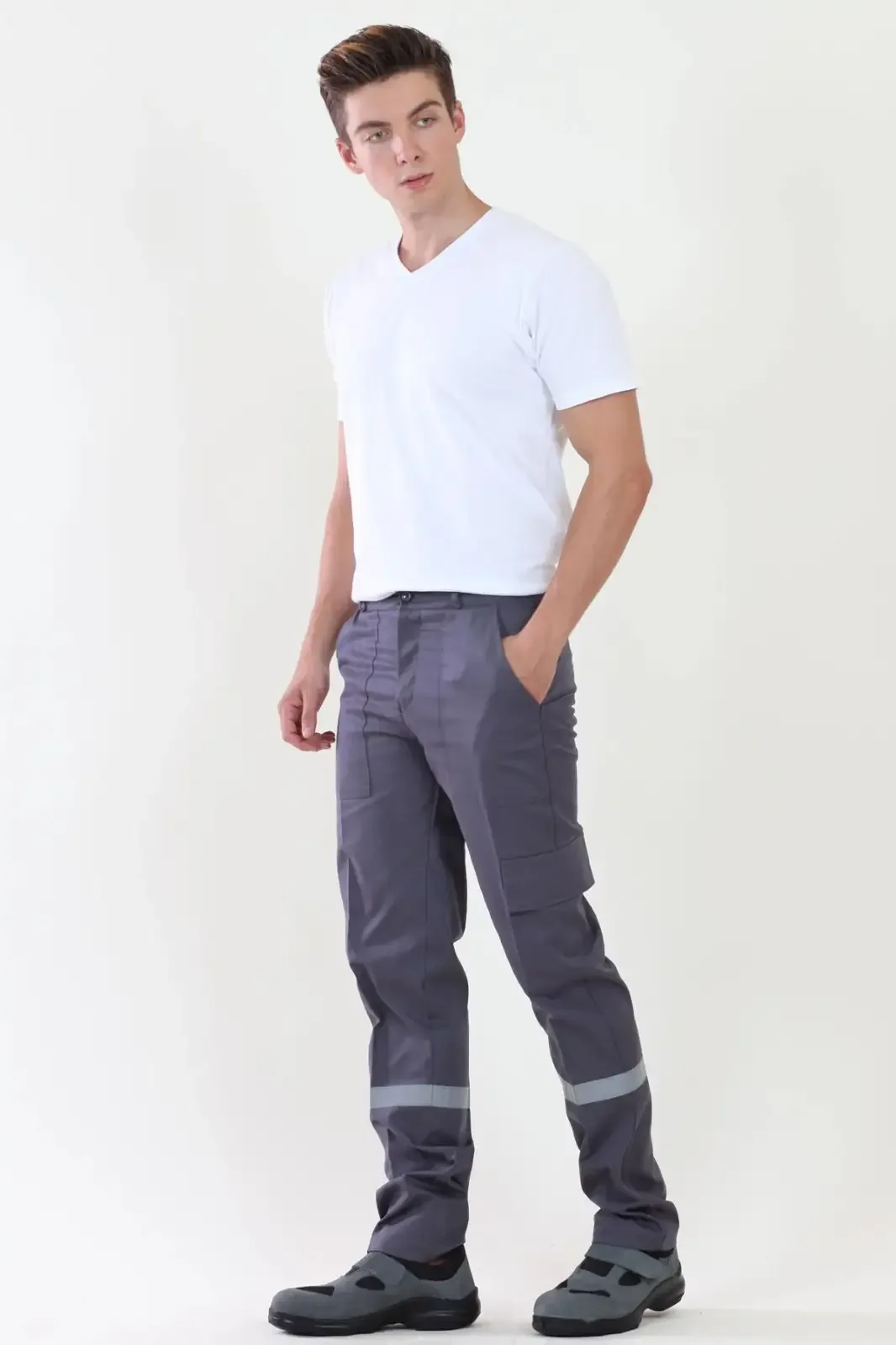
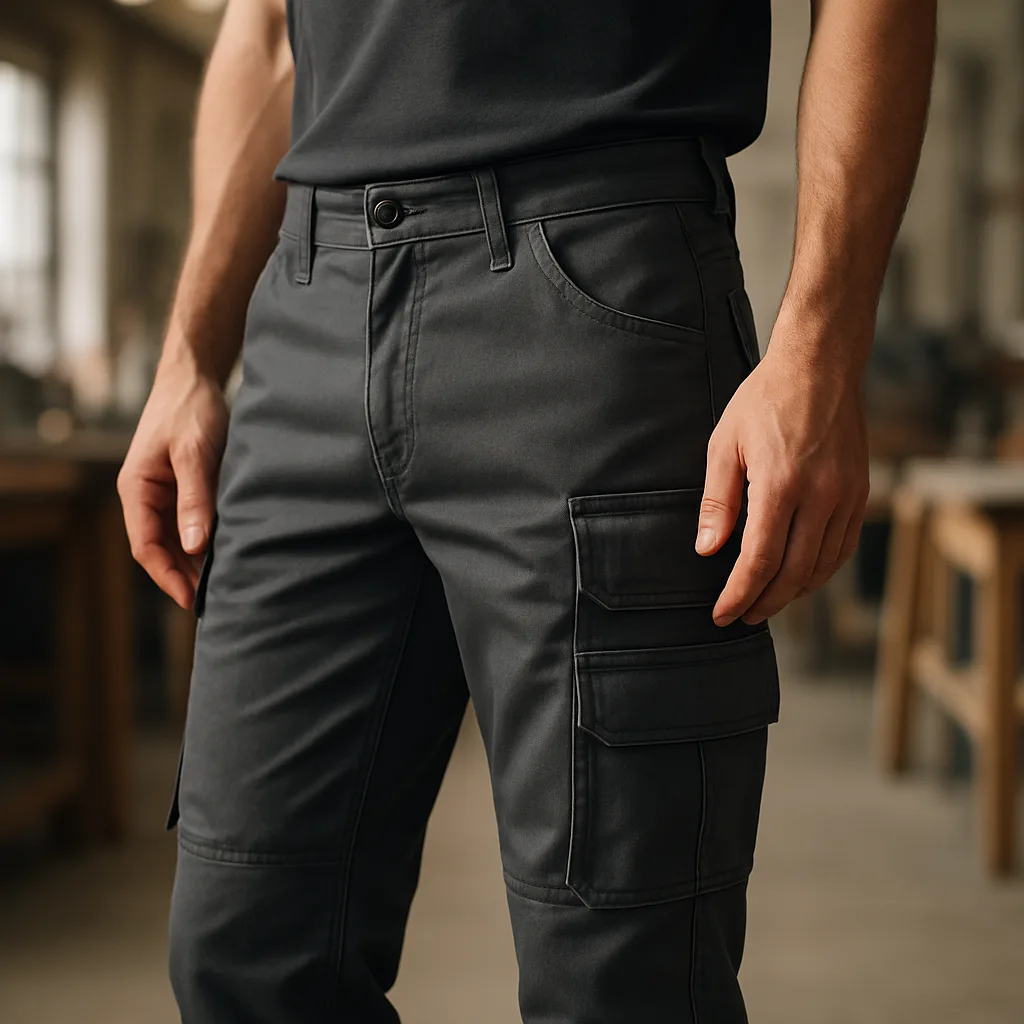
Multi-pocket cargo work trousers for teams carrying tools: pocket depth, flap direction and bar-tacks designed around the tools carried. With your logo, own facility, min. 100 pieces.
Average unit price · excl. VAT
≈ €8.91/pc
100 pcs
Estimated total €891
Indicative price converted from Turkish lira at the Central Bank of the Republic of Türkiye rate of 21 October 2026, excl. VAT. Request a quote for your exact export price.
Product description
What Are Cargo Work Trousers?
Cargo work trousers are multi-pocket work trousers made for staff who carry tools, measuring devices, phones and paperwork in large pockets on the sides of the thighs. In technical service they are a neater solution than a tool belt; that is also why they are preferred by teams who enter customers' premises.
Mars Wear produces them at its own facility in Zeytinburnu, Istanbul, with a pattern and logo specific to your organisation, from a minimum of 100 pieces, and ships within Türkiye and abroad.
Pocket Design, Not Pocket Count
The phrase "7 pockets" tells you nothing. Four things decide whether a cargo pocket is useful on site, and none of them is the number of pockets.
1. Depth, based on the tools carried. When a pocket is shorter than the longest tool in it, the tool sticks out of the opening and falls out when crouching. A team carrying screwdrivers, pliers and marker pens cannot have the same pocket depth as a team carrying multimeters and clamps.
2. Which way the flap opens. A flap that opens upwards empties the pocket when staff lean forward. Designing the flap to open sideways or downwards directly reduces tool losses for teams who bend while working.
3. Bar-tack reinforcement. Work trousers usually tear not at the fabric but at the pocket corners. The weight of a loaded pocket concentrates at two corners. If the pocket opening corners are not bar-tacked, it is those two points, not the fabric, that decide the trousers' lifespan.
4. Weight distribution. A full thigh pocket pulls the trousers down. If the number and width of belt loops and the waist seam are not designed for this, staff hitch their trousers up all day. For teams carrying heavy tools, trouser braces transfer this load to the shoulders.
That is why, at the sample stage, we ask you for the tools your team actually carries. Pockets are not chosen from a catalogue; a pocket is drawn around the tool.
Metal or Plastic? For Teams Who Enter Customers' Premises
In jobs such as white goods, furniture, glass and automotive servicing, technicians work next to surfaces that can be scratched. A metal snap or zip puller on a pocket flap touches the glossy surface when bending over.
For these teams we make the fasteners plastic snaps or hook-and-loop, and the zip puller fabric-covered. A small detail, but one that shows up in service complaints.
Fabric and the Knee Area
Standard production is 16/12 gabardine, 100% cotton. We also make the same pattern in a more tightly woven winter fabric — there is no need to rebuild the design at the change of season.
For teams who kneel to work (plumbing, cabling, flooring, formwork), the knee area is handled separately:
- Double-layer fabric — the most common and most economical reinforcement
- Cordura patch — for jobs where abrasion is on hard ground
- A pocket for knee pads — if the knee pad slipping is a problem; the pocket is built into the pattern from the start and cannot be added later
Colour Options
We produce dark shades (black, navy, anthracite, dark grey, brown, dark green) and field shades (khaki, tan, beige). In jobs with heavy oil and machine stains, dark shades extend the visible life of the garment.
If you have a corporate colour, our own design team matches the shade to your existing uniform.
Which Teams Are They For?
- Technical service — white goods, air conditioning and HVAC, electronic device servicing
- Telecoms, cable and internet service teams — installation and network maintenance
- Electricity distribution and energy maintenance — with an antistatic fabric option
- Natural gas and water network maintenance teams
- Site trades and workshop staff — carpenters, plumbers, formwork and steel fixers
- Logistics and warehousing — operations staff carrying handheld terminals and phones
- Landscaping and garden maintenance teams — secateurs, gloves, tying materials
Complete the Set
- Trouser Braces — transfer the load of full pockets to the shoulders
- Knee Pads — pocket type
- Work Belt — canvas, for teams carrying tools
- Winter Work Trousers — the winter counterpart of the same pocket layout
- Reflective Work Trousers — teams exposed to traffic or plant
For all options, see the work trousers category.
Logo Application
The most common positions are the side of the thigh and the cargo pocket flap. A logo on a pocket flap has one constraint: because the flap is constantly opened and closed, a print cracks again and again in the same place. In this area, embroidery lasts noticeably longer.
For a comparison of methods, see our logo printing and embroidery guide. If you do not have a ready logo, our own design team prepares the version to be used on the uniform.
Ordering and Production Process
- Needs discussion — a list and the sizes of the tools the team carries, working position (standing, kneeling, in a vehicle).
- Pocket layout — number, depth, flap direction and fastener type; knee reinforcement decision.
- Sample — a physical sample; we recommend approving it by putting the tools in the pockets and trying it.
- Design approval — the logo position and technique go to cutting with your written approval.
- Production — standard delivery 15 working days.
- Shipping — within Türkiye and abroad, delivered to multiple sites.
Our minimum order is 100. For the size breakdown, you can use our workwear size chart guide.
Care
- Empty all pockets before washing — a screw or bit left in a pocket wears out both the garment and the machine in the drum.
- Wash at 40 °C, inside out, with zips and snaps closed.
- Pre-treat oil and machine stains before washing; once dry they are harder to remove.
- Check the bar-tack stitching at the pocket corners periodically; if stitching that has started to come undone is repaired early, the garment is saved.
For details, see our workwear care guide and, for fabric options, our fabric guide.
Frequently Asked Questions
How many pockets do you make? Our standard layout has 7 pockets (2 side + 2 back + 2 thigh cargo + 1 pen/card). But that is not the right question: tell us the tools the team carries, and we will draw the pocket around them.
How much weight can a cargo pocket carry? We do not give a kilogram figure — the result depends on the fabric, pocket size and stitching reinforcement. What decides it is the bar-tack reinforcement at the pocket corners; we strengthen it for teams carrying heavy tools.
Does the pocket flap fastening have to be metal? No. For service teams working next to surfaces that scratch, we use plastic snaps, hook-and-loop and fabric-covered zip pullers.
Is knee reinforcement standard? It is optional. If a pocket for knee pads is wanted, it must be built into the pattern from the start; it cannot be added after production.
Can antistatic or flame-retardant fabric be used? Production with special fabric is possible on request. Because it adds supply and pattern time, it should be discussed at the start of the project.
Is there a winter version? Yes, the same pocket layout can be produced in a more tightly woven winter fabric. For details, see our winter work trousers page.
Do you produce a women's pattern? Yes, women's and men's patterns are developed separately. Size range XS–5XL, with larger special sizes.
What is your minimum order? 100 pieces.
Do you ship abroad? Yes, we ship within Türkiye and abroad.